Yugcharan News / 04-11-2026
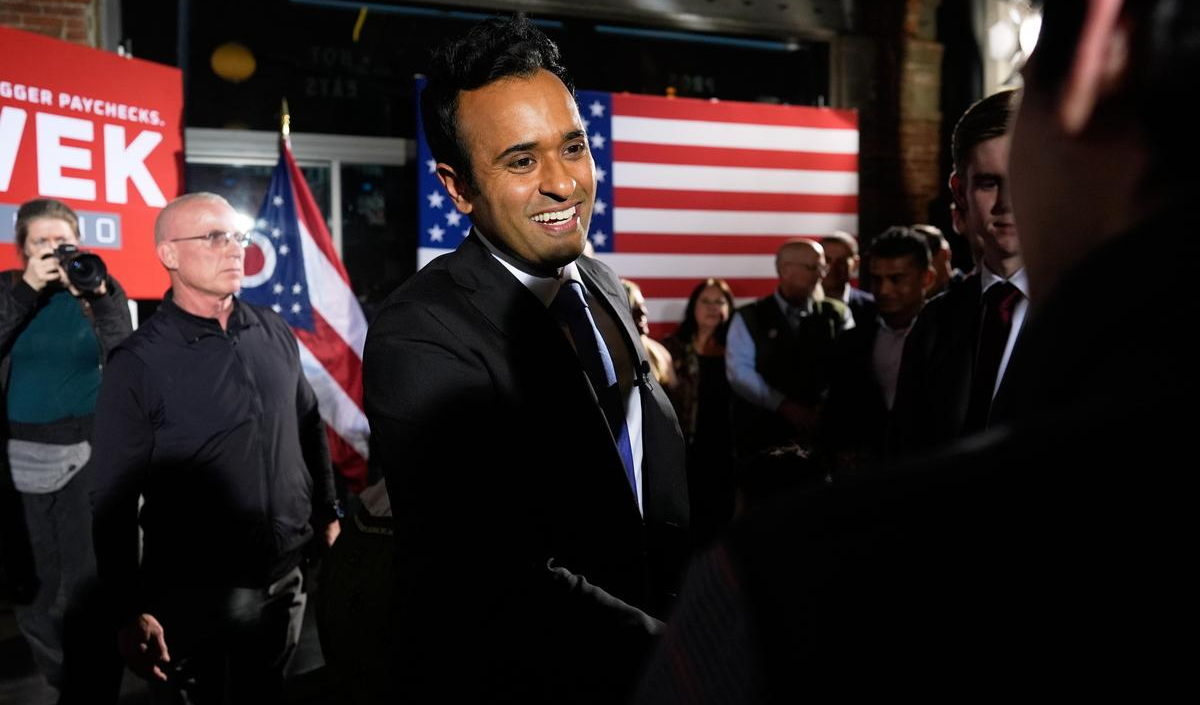
Vivek Ramaswamy’s decision to closely align his political future with US President Donald Trump has suffered a major setback after the billionaire entrepreneur lost the Ohio gubernatorial election. Despite receiving Trump’s backing and building his campaign around a political style closely associated with the president, Ramaswamy failed to secure victory in a state that Trump carried comfortably in the 2024 presidential election.
The result has raised questions about Ramaswamy’s political strategy, his dependence on Trump’s popularity and the effectiveness of controversial campaign tactics. His defeat also highlights the challenges facing wealthy political candidates who attempt to combine an anti-establishment message with policies that critics argue could benefit people in their own economic position.
According to a report by Forbes, Ramaswamy’s political rise was closely connected to his decision to embrace Trump’s brand of politics. He modelled aspects of his public image on the president, adopted an aggressive approach towards political opponents and sought to establish himself as an outsider challenging the traditional political establishment.
The strategy initially helped him gain national attention, access to political influence and recognition among Republican voters. Trump’s support for his Ohio gubernatorial campaign appeared to strengthen his position. However, the election outcome suggests that an alliance with Trump does not automatically translate into electoral success, particularly when voters are concerned about a candidate’s own campaign decisions.
Controversial campaign advertisement triggers backlash
One of the most contentious moments of Ramaswamy’s campaign came during the final stretch of the Ohio governor’s race, when his campaign aired an advertisement targeting Democratic opponent Amy Acton.
The advertisement featured Acton’s estranged mother describing her daughter as a liar. However, it did not include the wider family circumstances surrounding the relationship. According to the Forbes report, Acton’s mother had lost custody after her husband was indicted for raping Acton when she was 12 years old.
The advertisement triggered criticism across the political spectrum. Several politicians condemned the campaign’s decision to use the family dispute as an electoral weapon. Even Ohio’s Republican Governor Mike DeWine criticised the advertisement, making the controversy particularly uncomfortable for Ramaswamy within his own party.
Despite the backlash, Ramaswamy did not immediately withdraw the advertisement. It remained on air for more than a week, and he publicly defended the campaign's decision.
The controversy also exposed a difference between Trump's reaction and that of several Republican figures in Ohio. While Trump praised the advertisement, other prominent Republicans criticised it, indicating that the campaign tactic was not universally accepted even within the party.
The timing was significant. The advertisement appeared during the final phase of an election that had been considered competitive. Polling showed Ramaswamy losing ground after the advertisement aired, raising questions about whether the controversy damaged his chances of winning.
CNN calls the race for Amy Acton
CNN called the Ohio gubernatorial race for Acton on Tuesday night at 10:50 pm, when approximately 85% of the votes had been counted.
Ramaswamy’s defeat was particularly notable because Ohio had voted strongly for Trump in the 2024 presidential election. Trump had carried the state by more than 11 percentage points, making the gubernatorial result a setback for a candidate who had received the president’s endorsement.
In the weeks leading up to Election Day, the race had largely been viewed as a toss-up. This meant Ramaswamy had a realistic opportunity to win the governorship. However, the final result raised questions about whether his campaign's approach had weakened his position among voters.
The election does not establish that the controversial advertisement alone caused his defeat. Nevertheless, the timing of the backlash and the polling movement reported after its release have made the campaign strategy an important part of the post-election discussion.
Ramaswamy built his political identity around Trump
Ramaswamy’s association with Trump was not a last-minute electoral arrangement. It was a central part of the political strategy through which he built his national profile.
His calculation took shape during the 2024 Republican presidential primaries. At the time, Ramaswamy positioned himself as a political outsider challenging established institutions and the traditional Republican leadership. He adopted a communication style that closely resembled Trump’s approach and sought to appeal to voters attracted to the former president’s anti-establishment message.
In a 2023 interview with Forbes, Ramaswamy said he shared Trump's fundamental disdain for the existing political establishment and donor class. He described Trump as an outsider in the 2016 presidential race and presented himself as an outsider in the 2024 contest.
This positioning helped Ramaswamy attract national attention and build a following among sections of the Republican electorate. His political visibility increased, and his relationship with Trump eventually became an important asset in his Ohio campaign.
However, the same association also created a risk. By closely identifying himself with Trump, Ramaswamy made his political fortunes increasingly dependent on the president’s popularity and the public's response to his style of politics.
As Trump's political coalition faced signs of strain, the benefits of that association became less certain.
Billionaire image creates another political challenge
Ramaswamy’s personal wealth and business background also presented a challenge to his political messaging.
He sought to position himself as a critic of the political establishment and the influence of wealthy donors. However, as a billionaire, he faced questions about whether his economic proposals would benefit ordinary voters or people in similar financial positions.
The Forbes report highlights the potential political difficulty created by his proposed tax cuts, which critics could argue would benefit him personally. This presented a contrast between his anti-establishment image and his economic interests.
For candidates with significant personal wealth, the challenge is often to convince voters that their policies are designed for the wider public rather than for people with similar financial resources. Ramaswamy’s campaign had to navigate that question while also relying on a political identity built around opposition to established elites.
His defeat has brought renewed attention to this tension. The combination of billionaire status, tax-cut proposals and close alignment with Trump may have made it harder for him to appeal to voters beyond the Republican base.
Trump alliance initially delivered political benefits
Ramaswamy’s decision to align himself with Trump had delivered substantial advantages during the earlier stages of his political career.
After Trump lost the 2020 presidential election and Republicans performed below expectations in the 2022 midterm elections, Ramaswamy continued to bet on Trump's ability to regain political influence. His strategy was based on the belief that the former president would remain a dominant figure in Republican politics.
That calculation initially appeared successful. Ramaswamy gained national recognition during the 2024 Republican presidential primaries and became a prominent figure in the party. His relationship with Trump subsequently helped strengthen his position in Ohio.
However, political alliances can become liabilities when public sentiment changes. The Forbes report suggests that as Trump's coalition showed signs of weakening and voters became more sceptical of billionaires, Ramaswamy's close association with the president became a potential disadvantage.
His Ohio defeat has therefore raised a broader question about the limits of political loyalty and imitation. A candidate may benefit from adopting the language and strategy of a popular national figure, but that approach does not necessarily guarantee support in a state-level election.
What the result means for Ramaswamy’s political future
The Ohio result leaves Ramaswamy facing questions about the direction of his political career. His campaign had relied heavily on the political identity he developed through his association with Trump. The defeat suggests that he may need to reassess how much of his public image should continue to depend on the president.
The controversy surrounding the advertisement also raises questions about the limits of aggressive personal attacks in election campaigns. While such tactics may attract attention and energise supporters, they can also alienate voters and create divisions within a candidate’s own political party.
For Republicans, the result is significant because it came in a state where Trump had secured a substantial victory in 2024. It demonstrates that presidential support and state-level electoral success do not always move together.
Ramaswamy’s political rise was built on the belief that Trump’s brand of politics would remain influential and that embracing it would help him gain power and recognition. That strategy delivered visibility, political access and an endorsement from the president. But the Ohio election has exposed the risks of relying too heavily on another leader’s political identity.
His defeat does not, by itself, determine the future of his political career. However, it has made one issue difficult to ignore: the alliance that helped propel him into the national political spotlight may also have limited his ability to build an independent electoral appeal.