Yugcharan News / 04-11-2026
The Election Commission of India (ECI) has removed the Special Intensive Revision (SIR)-related declaration from the online version of Form 6, the statutory application used by citizens to register as new voters. The decision marks the completion of a series of reversals by the poll panel following objections raised by Election Commissioners Sukhbir Singh Sandhu and Vivek Joshi over changes introduced in the voter registration process.
The declaration, which had been incorporated into the online application available on the ECINet portal, required applicants to provide information about their family connections with previous electoral rolls prepared during earlier Special Intensive Revision exercises. Applicants were required to select one of three statements concerning whether their own name, their parents' names or their grandparents' names appeared in the electoral roll during the previous SIR conducted in the early 2000s.
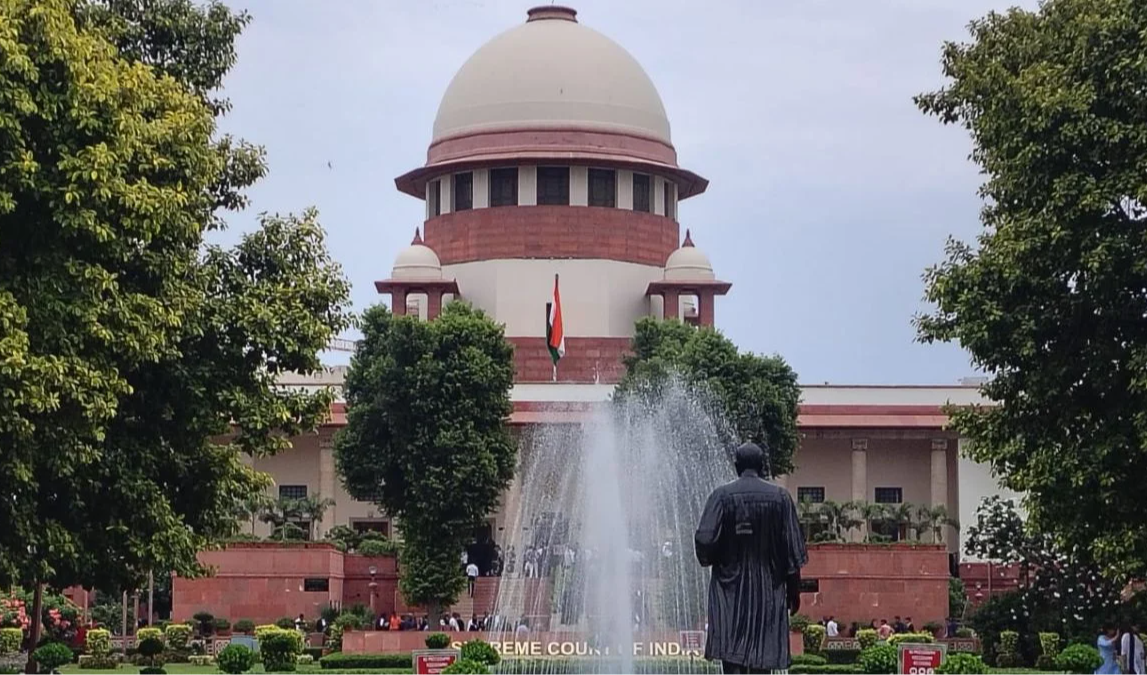
The removal follows an internal decision taken by the Election Commission's Electoral Roll (ER) Division on October 21, 2026. The Commission subsequently informed the Supreme Court about the decision through a counter-affidavit filed on October 26.
Under the revised arrangement, Form 6 and the SIR declaration will be treated as two separate documents in the online application process. This means the additional declaration will no longer appear as a mandatory section within Form 6, although it will remain available separately on the portal in states where the SIR exercise is underway.
The development is particularly significant because two Election Commissioners had previously questioned the legality of incorporating the additional declaration into the statutory voter enrolment form. Their objections formed part of a broader disagreement over the Election Commission's administrative decisions, electoral roll management and the functioning of its digital systems.
What Has Changed in Online Form 6?
Form 6 is the prescribed application form used by eligible citizens to seek inclusion in the electoral roll as new voters. The form operates under the Registration of Electors Rules, 1960.
During the ongoing SIR exercise, the Election Commission had introduced an additional declaration into the online version of Form 6 through its ECINet portal.
The declaration was placed between Sections J and K of the application and required applicants to choose one of three options.
The first option asked whether the applicant's own name appeared in the electoral roll prepared during the previous SIR exercise in the early 2000s.
The second option concerned whether the name of either the applicant's parent or grandparent appeared in that electoral roll.
The third option was intended for applicants whose names, as well as those of their parents, did not appear in the earlier electoral roll.
Applicants could not proceed with the online application without answering the additional question.
However, the insertion of this declaration raised questions about whether the Election Commission could introduce such a change without formally amending the statutory form.
Following the latest decision, the declaration has been removed from the online Form 6 application and made available as a separate document.
The change means that the statutory voter enrolment form and the additional SIR-related declaration will now be submitted separately, following the distinction between the two documents in the physical application process.
Election Commissioners Had Objected to the Change
The controversy surrounding Form 6 developed after Election Commissioners Sukhbir Singh Sandhu and Vivek Joshi raised objections to the inclusion of the SIR declaration in the statutory application.
According to the investigation published by The Indian Express on September 23, both Commissioners had recorded concerns about the change in official notes.
Vivek Joshi had raised the issue on May 16, 2026, arguing that the Election Commission could not modify the prescribed Form 6 without a legal amendment.
Sandhu subsequently supported the objection on May 19.
Despite these concerns, the additional declaration appeared in the online application in July, as reported by The Indian Express on July 12.
The disagreement continued, with Sandhu writing on August 13 that the inclusion of the declaration was "unauthorised/illegal" and should be removed immediately.
However, the declaration remained part of the online application even after these objections.
The matter received wider attention following The Indian Express investigation published on September 23, which reported that the two Election Commissioners had raised objections at least 14 times over a period of 10 months regarding decisions taken in the name of the Commission.
The objections covered several aspects of the Election Commission's functioning, including voter registration, deletion and restoration of names from electoral rolls, appeals against restoration decisions and control over the digital systems used to maintain voter records.
The latest Form 6 decision is being viewed as another major development following those objections.
Why the Election Commissioners Considered the Change Unauthorised
The central issue in the Form 6 dispute concerned the legal authority required to modify a statutory voter registration form.
Form 6 is prescribed under the Registration of Electors Rules, 1960. According to the objections recorded by the two Election Commissioners, any formal amendment to the prescribed form would require action by the Central Government rather than an administrative alteration by the Election Commission.
Joshi had specifically raised this concern in his May 16 note.
Sandhu also questioned the legal basis for the change in his August 13 communication, describing the insertion as unauthorised and illegal.
The disagreement was therefore not simply about the information being collected from new voters. It also concerned the procedure through which statutory forms can be modified and the respective legal powers of the Election Commission and the Central Government.
The Election Commission, however, maintained in its subsequent court affidavit that Form 6 had never formally been amended.
In its counter-affidavit, the Commission stated that there was no substance in the argument that Form 6 had been amended through the SIR orders.
At the same time, it acknowledged that the manner in which the declaration was displayed on the online platform had created concerns because applicants could interpret it as an amendment to the prescribed statutory form.
The affidavit stated that Form 6 could only be amended by the Central Government.
The latest decision to separate the declaration from the online application appears to address this presentation-related concern without abandoning the separate SIR declaration itself.
Election Commission's Explanation Before the Supreme Court
The Election Commission provided details of the decision in its counter-affidavit filed before the Supreme Court on October 26.
According to the affidavit, the Electoral Roll Division had decided on October 21 to separate the online Form 6 application from the SIR-related declaration.
The Commission explained that the declaration had originally been incorporated into Form 6 to simplify the online application process.
When both documents were placed together, applicants needed to generate only one One-Time Password (OTP) and complete one electronic signature.
Had the two documents been presented separately, applicants would have needed to complete two OTP procedures and two e-signatures.
The Commission described this arrangement as a measure taken with a "bonafide objective".
However, the affidavit acknowledged that the presentation of the declaration within the online application could create the impression that the statutory form itself had been amended.
To address the issue, the Commission decided that online applications would follow the same two-part arrangement applicable to physical submissions.
The affidavit stated that the online application would consist of Form 6 as prescribed under the rules and a separate SIR declaration.
This decision has now been implemented on the ECINet portal in states where the SIR exercise is still underway.
Supreme Court's Earlier Clarification on Form 6
The controversy also involved earlier proceedings before the Supreme Court concerning the SIR declaration.
On September 23, following the publication of the investigation into the objections raised by the two Election Commissioners, the Election Commission issued a press note defending its decisions.
The statement maintained that the Commission's actions had been taken in accordance with applicable laws and its instructions.
It also described the notes recorded by the Commissioners as operational queries or inputs raised during the drafting and deliberation stages.
Three days later, on September 26, the full Commission held a meeting and issued another statement addressing the Form 6 issue.
The Commission said that the SIR declaration attached to Form 6 had been upheld by the Supreme Court. It also stated that forms prescribed under the Registration of Electors Rules, 1960, would be used during periods when the SIR exercise was not underway.
This position resulted in the declaration remaining part of the online Form 6 application in states where the intensive revision process was continuing, including Delhi and Maharashtra.
However, on October 12, the Supreme Court clarified that it had neither approved nor disapproved the modified Form 6.
Following this clarification, the Electoral Roll Division decided on October 21 to remove the declaration from the Form 6 page and maintain it as a separate document.
The decision was subsequently communicated to the Supreme Court through the October 26 affidavit.
Five Weeks of Changes Following the September Investigation
The latest Form 6 decision is part of a broader series of administrative changes made by the Election Commission following the September 23 investigation.
The Indian Express had reported that Election Commissioners Sandhu and Joshi had raised objections on at least 14 occasions over 10 months.
Their concerns extended beyond the voter enrolment form and included the Commission's internal decision-making procedures, software systems and the authority exercised by senior officials.
In the five weeks following the investigation, the Election Commission introduced several changes addressing issues raised by the two Commissioners.
One important development concerned meetings of the full Commission. The Election Commission has decided that agendas will be circulated before meetings and minutes will be issued afterwards. The two Commissioners had earlier raised concerns that these procedures were not being followed.
The Commission also addressed concerns regarding foreign travel by officials. Under the revised arrangement, officers' overseas trips will require approval from the Commission.
Changes were also announced concerning the development of new information technology systems and digital modules under Director General of IT Seema Khanna.
The revised process requires new IT modules and portals to be examined by a Committee of Officers before being placed before the Commission for approval.
These steps are intended to strengthen institutional oversight over digital systems used in electoral administration.
ECINet Audit Ordered After Concerns Over Centralisation
Another significant development concerns the ECINet platform, which plays an important role in managing electoral roll-related activities.
Election Commissioner Vivek Joshi had previously sought an audit of the platform on May 29, raising concerns about what he described as the gradual centralisation of the electoral roll database.
Sandhu supported the proposal on July 13 and recorded on August 14 that the proposed audit had not progressed.
Following the September investigation, the Election Commission constituted a committee through a circular issued on October 14 to examine ECINet's compliance with applicable laws and rules.
The committee is headed by a Senior Deputy Election Commissioner and includes another Senior Deputy Election Commissioner, a Deputy Election Commissioner, a Director, four Chief Electoral Officers and two independent experts from IIT Bombay and the Indian Institute of Science (IISc), Bengaluru.
The audit is expected to examine the platform's functioning in relation to the legal and administrative framework governing electoral rolls.
The issue is important because ECINet is used by election officials for various processes involving voter registration, deletion, restoration and maintenance of electoral records.
The concerns raised by the Commissioners included whether field-level statutory authorities had sufficient access and control over the system.
Changes to Powers of Electoral Registration Officers
The Election Commission has also introduced changes intended to provide greater discretion to field-level election officials through modifications to the ECINet software.
Several changes were made following requests submitted by Maharashtra Chief Electoral Officer S. Chockalingam in a letter dated September 24.
Under the revised arrangements, personal hearings for voters who receive notices over mapping failures or logical discrepancies are now treated as exceptional rather than routine. Booth Level Officers can instead collect documents from voters at their homes.
Voters have also been allowed to submit documents outside the 13 categories previously listed.
Another change allows Electoral Registration Officers (EROs) to decide cases involving logical discrepancies themselves rather than automatically routing them to District Election Officers.
Additionally, the mandatory requirement to upload an extract from the previous SIR electoral roll has been removed.
These changes address concerns raised by Sandhu regarding the centralisation of access controls within the IT department.
He had previously argued that responsibilities relating to electoral rolls rested with EROs, District Election Officers and Chief Electoral Officers, and that statutory authorities should have proper access and freedom to perform their legally assigned duties.
Goa Voter Deletions and Restoration Issue
The Commission has also taken action concerning a separate issue involving 97 voters in Goa whose names were deleted during the draft electoral roll process.
According to the investigation, the affected voters had submitted documents and were cleared by the state's Electoral Registration Officers for restoration.
However, the ECINet software did not provide election officials with an option to reverse the deletions, even after the voters had been cleared.
The Chief Electoral Officer's office reportedly wrote to the Election Commission's headquarters in Delhi eight times over seven days, with the communications also copied to Director General of IT Seema Khanna.
Despite these efforts, the final electoral roll was published without the 97 voters.
The Election Commission has since directed the Chief Electoral Officer to facilitate their inclusion.
In its affidavit, the Commission stated that 88 of the 97 voters had submitted Form 6 applications and that their applications had been accepted. Six voters were outside the country, while three held Portuguese passports.
The development highlights the importance of ensuring that digital systems allow authorised election officials to implement decisions involving the restoration of eligible voters.
Fresh Voter Enrolment Exercises Ordered
Alongside the administrative and technical changes, the Election Commission has initiated additional voter enrolment exercises.
On September 29, the Commission directed states where the SIR process had been completed to conduct a special drive for enrolling voters who had been left out of the electoral rolls.
It also ordered a Special Summary Revision in 17 states and Union Territories during November.
The exercise is primarily aimed at people who will turn 18 in 2027 and become eligible for voter registration.
Importantly, applicants submitting Form 6 during this Special Summary Revision exercise will not be required to complete the SIR-related declaration.
This is separate from the arrangement applicable to states where the Special Intensive Revision is still underway.
Election Commission Defends Its Decisions
Despite the changes introduced over the past five weeks, the Election Commission has maintained before the Supreme Court that its decisions were not legally incorrect.
In its affidavit, the Commission stated that the document had been approved for filing through a unanimous decision of its three members.
It also argued that a note recorded by an individual Commissioner does not itself constitute a formal decision of the Election Commission under Section 18.
The Commission further maintained that certain steps taken by officers assigned specific responsibilities required correction.
The affidavit therefore presented the changes as administrative corrections rather than an admission that the Commission's earlier decisions had been legally invalid.
The latest Form 6 development brings the specific dispute over the placement of the SIR declaration to a new stage.
With the declaration now separated from the statutory voter enrolment form, the Election Commission has addressed the central concern regarding its presentation on the online platform.
However, the wider questions raised about institutional decision-making, digital control over electoral rolls and the responsibilities of statutory election officials remain important issues in the ongoing discussion about electoral administration in India.