Yugcharan News / 04-11-2026
A growing confrontation between Delhi Police personnel and the legal fraternity has triggered a major institutional dispute in the national capital, following allegations of threats, misconduct and misuse of authority involving Assistant Commissioner of Police (ACP) Manasvi Vashishta. What began as a disagreement outside a salon in Northeast Delhi has escalated into protests by police personnel, an indefinite strike by lawyers across district courts and demands for action from both sides.
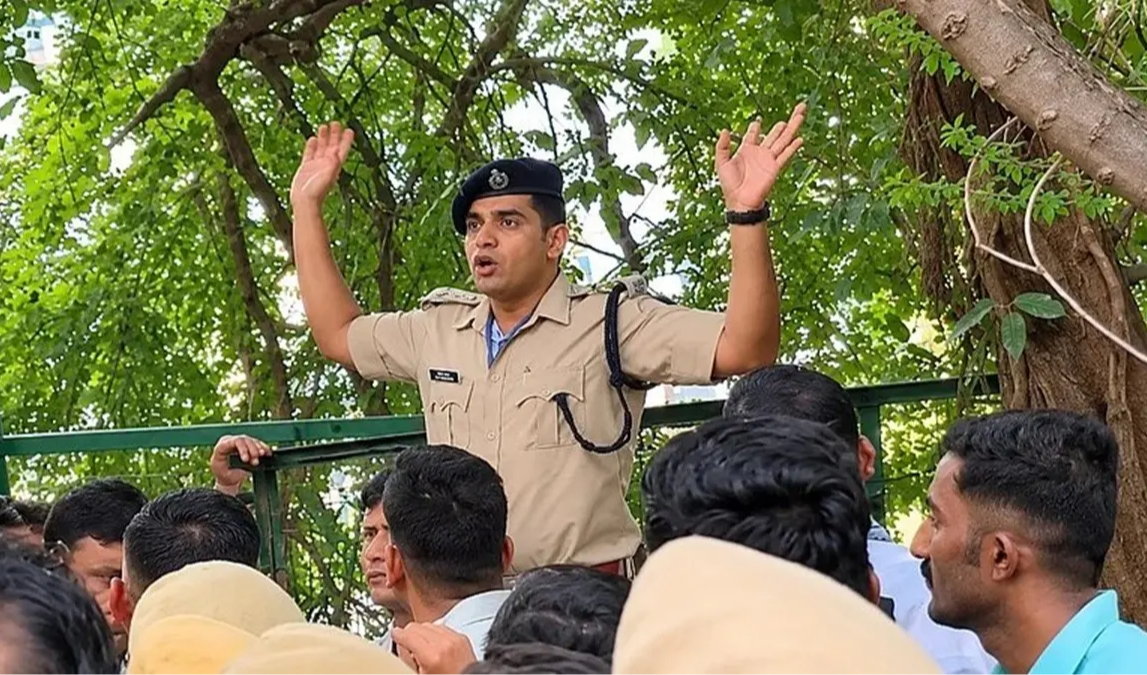
The controversy intensified on November 2, when more than 100 Delhi Police personnel gathered outside the headquarters of their own department to protest against what they described as pressure and intimidation by members of the legal fraternity. The demonstration was led by ACP Manasvi Vashishta, who had been transferred following the protests by district court lawyers.
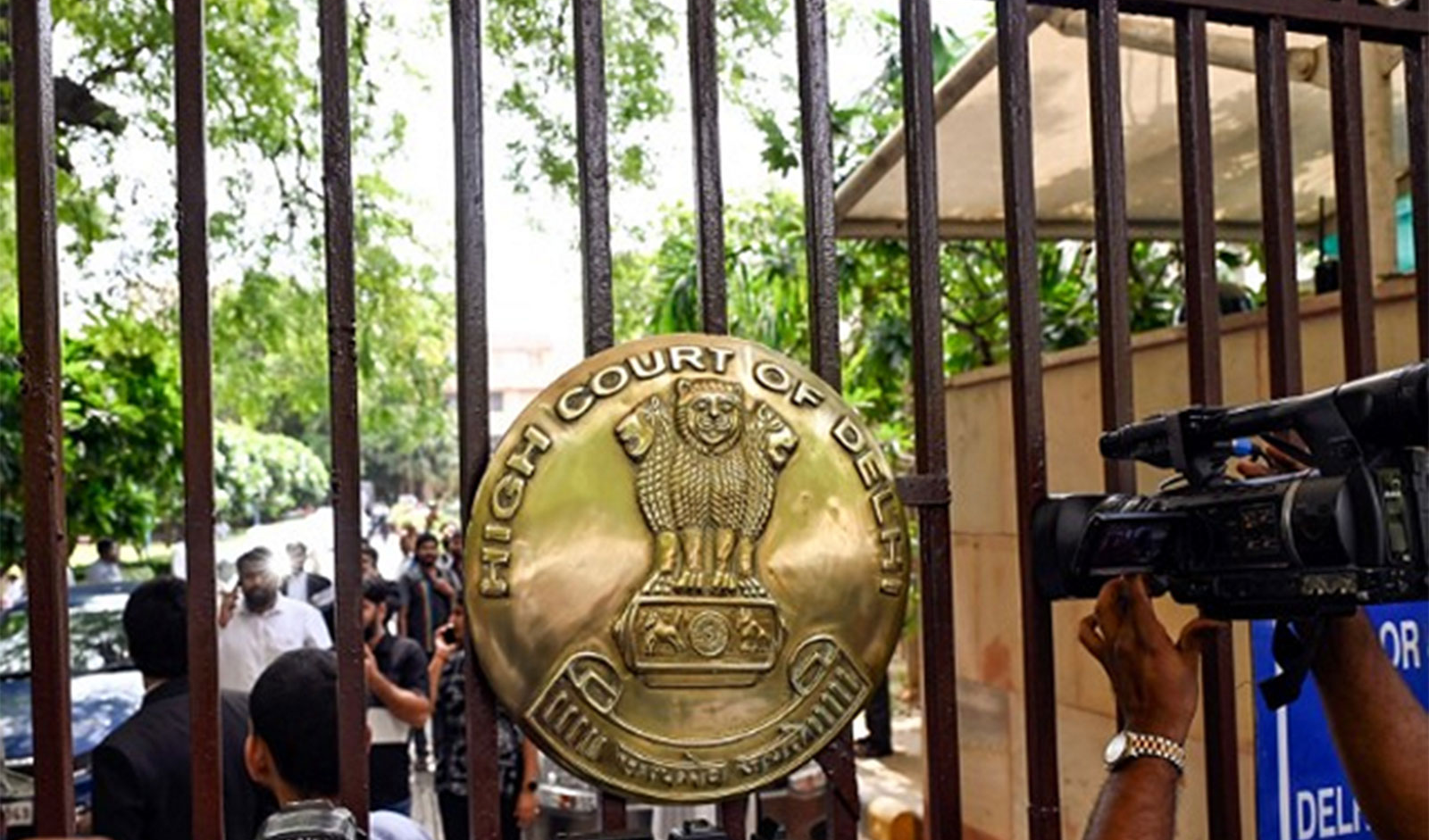
Within hours of the demonstration, the Ministry of Home Affairs (MHA) suspended Vashishta. The following day, on November 3, a group of lawyers approached the Delhi High Court, requesting the Chief Justice to take suo motu cognisance of alleged threats made by Vashishta and other police personnel against advocates.
The High Court declined to initiate proceedings on its own but asked the lawyers to file a formal petition. The Bench assured them that the matter would be examined if a plea was submitted.
The dispute has since developed into a wider confrontation involving questions about police accountability, lawyers' conduct, the security of police personnel and the relationship between law enforcement agencies and the legal profession.
How the Dispute Began: A Parking Disagreement Outside a Salon
According to the account cited in the Bar and Bench report, the controversy began on October 23 in Rohtash Nagar, Northeast Delhi, following an altercation over a motorcycle parked outside a salon.
The disagreement reportedly escalated into allegations that a group of lawyers returned to the salon, vandalised the premises and assaulted its owner, Sheetal Thakur, who was eight months pregnant.
Later that day, both groups reached the police station, where another confrontation allegedly took place. During the incident, advocate Lalit Bansal sustained a head injury.
Lawyers claimed that police personnel had assured them that action would be taken against those accused of assaulting the advocate. However, they alleged that the accused individuals were subsequently allowed to leave.
The following day, October 24, a group of lawyers, accompanied by Lalit Bansal, reached the police station to question the handling of the matter. This led to another confrontation between advocates and police personnel.
According to the lawyers, ACP Manasvi Vashishta threatened them by displaying his service revolver when they questioned the police response to the earlier incident. They also accused him of failing to take appropriate action against those allegedly involved in the assault on lawyers, including advocate Lalit Bansal.
Vashishta presented a different account of the incident. He alleged that approximately 15 to 20 lawyers entered the police station, abused police personnel, misbehaved with officers and obstructed them from performing their official duties.
An FIR was registered against a group of lawyers in connection with the incident. The competing allegations triggered protests by advocates and an indefinite strike across Delhi's district courts.
Videos of the Police Station Confrontation Emerge
The controversy gained further attention after videos of the October 24 incident surfaced on social media.
One of the videos reportedly shows a group of lawyers entering a room where ACP Vashishta and the Shahdara Station House Officer (SHO) were seated. Vashishta can be seen holding a firearm.
As the lawyers enter, he is heard asking a junior officer to take away the gun he is holding, saying that he had asked for a bigger one. The junior officer subsequently takes the firearm away.
The video then shows lawyers shouting at the SHO. At one point, a lawyer is seen grabbing the SHO's arm.
The footage added another dimension to the dispute, with both sides using the incident to support their respective allegations. Lawyers have focused on the alleged threat involving the service revolver, while the police have raised concerns about the conduct of advocates inside the police station.
The available video, as described in the report, forms part of the wider controversy. The competing allegations remain matters requiring examination by the appropriate authorities.
Transfer of ACP Vashishta and Shahdara SHO
On October 28, ACP Manasvi Vashishta and the Shahdara SHO were transferred following the escalating dispute and protests by lawyers.
The transfers, however, did not bring the confrontation to an end. Instead, they became a major point of disagreement among police personnel, who viewed the action as a matter of concern for the force.
For lawyers, the transfers came amid demands for accountability over the alleged threat and the handling of the original assault complaint.
The disagreement over the transfers eventually contributed to the unprecedented demonstration by police personnel outside Delhi Police Headquarters on November 2.
Why Delhi Police Personnel Protested Outside Their Headquarters
More than 100 Delhi Police personnel gathered outside the department's headquarters on November 2 to protest against what they described as intimidation and pressure from lawyers.
The demonstration was led by ACP Vashishta, whose transfer had become a major issue among sections of the police force.
The protesters alleged that police personnel were being threatened and pressured by lawyers while carrying out their official responsibilities. They argued that officers should be able to discharge their duties without facing intimidation or interference.
The police personnel raised several demands, including action against lawyers accused of misbehaving with officers, improved security arrangements at police stations and court complexes, and the creation of a formal mechanism through which police personnel could raise grievances.
The protesters eventually submitted a set of five demands to the authorities.
Their demonstration was unusual because it involved police personnel protesting outside the headquarters of their own institution. The incident also highlighted the growing frustration within sections of the police force over the continuing confrontation with lawyers.
Vashishta's Remarks Trigger Fresh Anger Among Lawyers
The situation became more tense after videos of ACP Vashishta's statements during the November 2 demonstration circulated on social media.
In one video, he is heard referring to lawyers as "kaale coat wale gunde", meaning "goons in black coats". He also used the phrase "kaale coat ka behroopiya", which can be translated as "impostors in black coats".
The remarks drew strong criticism from members of the legal fraternity, who described them as insulting and threatening towards lawyers as a whole.
During the protest, Vashishta also demanded that at least two companies of police personnel be deployed in district courts. He argued that such a deployment would allow police personnel to enter court premises with confidence and ensure action against lawyers who misbehave with them.
The statements further widened the divide between the two institutions. Lawyers argued that the comments went beyond criticism of individual conduct and amounted to an attack on the legal profession.
Lawyers Demand Action Against the ACP
Following the circulation of Vashishta's remarks, several bar associations in Delhi wrote to the Lieutenant Governor and the Delhi Police Commissioner, demanding immediate action against him.
The Rohini Court Bar Association also announced that it would go on strike until action was taken. However, the association withdrew its strike call after the Ministry of Home Affairs suspended Vashishta.
The controversy subsequently reached the Delhi High Court on November 3.
A group of lawyers requested the court to take suo motu cognisance of the ACP's remarks and the alleged threats made against members of the legal fraternity.
The matter was placed before a Division Bench comprising Acting Chief Justice Nitin Wasudeo Sambre and Justice Sanjay Sharma.
The lawyers argued that the statements made during the police protest were serious and could be interpreted as threats against advocates.
However, the Bench declined to initiate proceedings on its own. It asked the lawyers to file a formal petition and assured them that the issue would be looked into once the plea was submitted.
The court's response leaves the possibility of further judicial examination open, depending on whether a formal petition is filed.
A Long History of Confrontations Between Delhi Police and Lawyers
The current dispute is not the first major confrontation between Delhi Police and the legal fraternity. The two institutions have witnessed several serious clashes in the past, including incidents that resulted in prolonged court strikes and large-scale protests.
One of the major confrontations took place in January 1988, when lawyers protested against the arrest and alleged handcuffing of an advocate in connection with a theft case at St Stephen's College.
The protests escalated into a confrontation at Tis Hazari Courts, where a police lathi-charge left several lawyers injured.
The legal fraternity subsequently went on strike for approximately two months, demanding the resignation of then Deputy Commissioner of Police Kiran Bedi.
The strike was eventually called off after the Delhi High Court constituted a committee headed by a sitting judge to investigate the incident.
The committee reportedly concluded that the handcuffing of the advocate was illegal and recommended that Bedi be transferred.
Another major confrontation occurred on November 2, 2019, at Tis Hazari Courts following a parking dispute between a lawyer and a police personnel.
The disagreement escalated into violence, with clashes also reported at Saket and Karkardooma Courts. Several people were injured, and vehicles were set on fire during the unrest.
The incident triggered widespread protests by lawyers. On November 5, 2019, hundreds of Delhi Police personnel also demonstrated outside their headquarters, making the confrontation between the two institutions even more serious.
The similarities between the earlier incidents and the current dispute have renewed concerns about the possibility of another prolonged standoff between police personnel and advocates in the national capital.
What Happens Next?
The suspension of ACP Manasvi Vashishta by the Ministry of Home Affairs has become a significant development in the dispute, but it may not be enough to resolve the underlying tensions.
Lawyers' associations have criticised his remarks and are considering further legal action. A formal petition before the Delhi High Court could bring the allegations and the circumstances surrounding the November 2 protest under judicial scrutiny.
Vashishta, meanwhile, may also approach the courts to challenge his suspension.
The police have raised concerns about alleged intimidation and misconduct by lawyers, while advocates are demanding accountability over the alleged threat involving a service revolver and the comments made against the legal fraternity.
Both sides have therefore placed serious allegations on record, and the dispute now extends beyond the original incident in Rohtash Nagar.
The coming days are likely to be important in determining whether the matter can be resolved through administrative action, dialogue between police officials and bar associations, or judicial intervention.
At its core, the controversy raises questions about the professional responsibilities of both police personnel and lawyers. Police officers are expected to exercise their authority lawfully and maintain public order, while advocates are entitled to question official action and represent their clients without intimidation.
A lasting resolution will require the allegations against individuals on both sides to be examined fairly and through established procedures. Without a mutually acceptable mechanism to address grievances, the confrontation could further affect the functioning of police stations and district courts across Delhi.