Yugcharan News / 22-09-2026
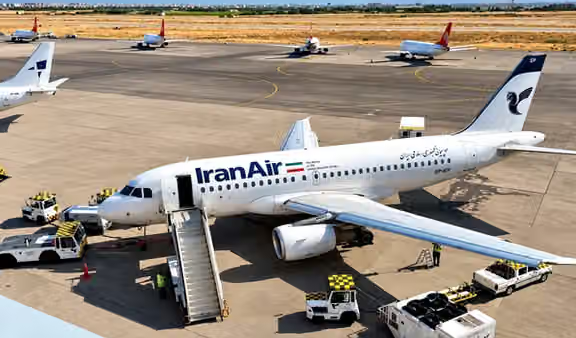
The United States has stepped up economic pressure on Iran, with Treasury Secretary Scott Bessent warning that Iranian airlines could effectively be shut out of international operations from September 23 as Washington threatens secondary sanctions against foreign companies that continue providing services to the carriers.
The warning comes amid continuing military and diplomatic tensions between Washington and Tehran, with the Strait of Hormuz remaining a major point of concern for global energy and shipping markets. At the same time, diplomatic activity is increasing around the United Nations General Assembly in New York, where Iranian and US officials are expected to remain in focus.
Bessent’s warning represents a further expansion of the US sanctions campaign against Iran. The US Treasury had already announced sanctions on September 8 targeting the remaining Iranian commercial airlines and entities linked to the country’s aviation sector. According to the Treasury Department, the action targeted 36 individuals and entities as part of its broader “Operation Economic Outcast.”
US Threatens Secondary Sanctions on Aviation Services
Bessent said Iranian airlines could face severe difficulties operating internationally from September 23 because foreign airports, fuel suppliers, ground-handling companies and ticketing operators could face US financial penalties if they continue servicing the carriers.
The measures would not simply target Iranian airlines directly. By threatening companies in other countries with restrictions on access to the US financial system, Washington is seeking to discourage international aviation service providers from maintaining business relationships with Iranian carriers.
The US Treasury has previously warned that organisations facilitating transactions or sanctions evasion involving Iran could face restrictions from the American financial system. The latest warning extends that pressure to the international aviation network on which Iranian carriers depend for fuel, airport access and other essential services.
The practical effect could be significant for Iranian airlines operating international routes. Even if an airline itself retains aircraft and crews, restrictions on refuelling, landing services, ticket sales and other airport support could make international operations difficult.
Earlier US Sanctions Targeted Iranian Aviation Sector
The latest warning follows a major Treasury action announced earlier this month. On September 8, the US Treasury Department said it had sanctioned 36 targets connected with Iran’s aviation sector, including entities and intermediaries that Washington accused of helping the country obtain aircraft, technology and other aviation-related equipment.
The Treasury said Iranian commercial airlines had been used by the Iranian regime for activities including the movement of weapons, personnel and illicit cargo. The department also said its sanctions action was intended to disrupt networks used by Iran to obtain US-origin aircraft and sensitive technology.
Washington has described the broader sanctions campaign as an effort to cut off what it considers Iran’s remaining economic and financial channels. The Treasury has also warned companies outside Iran that continuing to facilitate transactions or services for sanctioned Iranian entities could expose them to US sanctions.
Strait of Hormuz Remains Major Flashpoint
The aviation measures come as tensions around the Strait of Hormuz continue to affect international shipping and energy markets.
The narrow waterway is one of the world's most important oil transit routes. Recent shipping data has shown a sharp decline in vessel traffic through the strait compared with normal pre-conflict levels. Reuters reported that only 17 commodity vessels crossed the waterway over one recent weekend, compared with 37 the previous week and a pre-war average of about 125 vessels a day.
Despite the reduction in traffic, oil exports from Gulf producers have continued. Saudi Arabia has increased shipments through terminals on the Gulf side, while vessels have continued navigating the waterway amid heightened security concerns. Reuters reported that Saudi oil exports through the Strait of Hormuz had risen substantially following disruptions to other export routes.
The continuing uncertainty has kept oil prices elevated and volatile. On September 22, Brent crude futures rose, with the November contract gaining $1.14 to $101.48 a barrel, while US West Texas Intermediate futures for October increased 87 cents to $96.65. Reuters attributed the movement partly to expectations surrounding possible US-Iran diplomatic engagement at the UN General Assembly.
Iran Signals Readiness for Further Conflict
While Washington has increased economic pressure, Iranian officials have continued to issue warnings that Tehran remains prepared for further military confrontation.
Iran's Revolutionary Guards said the country's armed forces were on high alert and ready to respond to any further US or Israeli military action. The statement came as Iran marked the anniversary of the beginning of the Iran-Iraq War.
Iranian military officials have also pointed to the country's ability to influence activity around the Strait of Hormuz as evidence of its strategic leverage. The statements come against a backdrop of continuing military tensions and uncertainty over whether diplomatic efforts can produce a reduction in hostilities.
Iranian Foreign Ministry spokesperson Esmaeil Baghaei has separately accused Washington of attempting to shift responsibility for the disruption of shipping and rising fuel prices onto Tehran. His comments reflect the sharply conflicting narratives being presented by the two sides.
Diplomatic Activity Intensifies at UN
Despite the military rhetoric, diplomatic activity has also increased as world leaders gather in New York for the United Nations General Assembly.
Iranian Foreign Minister Abbas Araghchi spoke by telephone with UN Secretary-General Antonio Guterres after arriving in New York, according to Iranian media reports. Their discussions reportedly included the UN General Assembly agenda and international peace and security.
Iranian President Masoud Pezeshkian is also expected to address the UN General Assembly. However, Iran has accused Washington of denying visas to several members of his delegation, describing the move as hostile.
An Iranian lawmaker, Mohammad Rostami, meanwhile rejected the possibility of direct talks between Pezeshkian and US President Donald Trump, saying such negotiations would not be acceptable. His comments illustrate the political obstacles facing any potential diplomatic engagement.
Trump has indicated that he would be open to meeting the Iranian president, although the two sides continue to differ sharply over the conditions for negotiations and the broader conflict.
Regional Tensions Continue
The US-Iran confrontation is also affecting other parts of the Middle East.
In Yemen, government forces reported attacks against Houthi fighters and supply routes in areas near the Bab al-Mandeb Strait and in Al-Bayda governorate. Yemeni authorities also accused Houthi forces of attacking a commercial market in Lahj province with ballistic missiles, resulting in civilian injuries and damage to property and vehicles.
Separately, Saudi Arabia has faced attacks linked to the wider regional conflict. The United Kingdom has agreed to provide limited defensive air-to-air refuelling support to Saudi Arabia following a request from Riyadh, according to the report.
Pakistan and Saudi Arabia have also discussed regional security cooperation at the UN General Assembly, while Pakistani and Egyptian officials have called for dialogue and diplomacy in addressing the conflict involving Iran and the wider Middle East.
Impact on International Aviation and Energy Markets
The possible shutdown of Iranian airlines would add another layer to the economic consequences of the conflict.
Iranian aviation has already operated under extensive international restrictions for years, limiting access to aircraft, spare parts, financing and other aviation services. The new US pressure is aimed at making it harder for Iranian carriers to rely on international infrastructure.
The potential consequences extend beyond aviation. Restrictions affecting fuel supplies, shipping routes and access to financial systems could influence trade and transportation costs across the region.
For global energy markets, the Strait of Hormuz remains particularly important. Any sustained disruption to traffic through the waterway could affect the movement of crude oil and other energy products, while diplomatic progress could have the opposite effect by easing supply concerns.
For now, markets remain sensitive to developments on both the military and diplomatic fronts. Oil prices have remained above $100 a barrel for Brent in recent trading, while shipping activity through the Strait of Hormuz remains below normal levels.
The September 23 deadline cited by Bessent will therefore be closely watched by airlines, airports, fuel suppliers and other aviation companies with links to Iranian carriers. The immediate impact will depend on how foreign service providers respond to the threat of US secondary sanctions and whether diplomatic efforts at the United Nations lead to any reduction in tensions.
As Washington continues its economic campaign against Tehran, Iran maintains that it is prepared for further confrontation while also engaging through diplomatic channels. The combination of sanctions, military pressure, disrupted shipping and negotiations at the UN has left the wider Middle East facing continued uncertainty, with developments around the Strait of Hormuz and US-Iran contacts likely to remain central to the crisis.