Search

    Language Settings
    Select Website Language

    GDPR Compliance

    We use cookies to ensure you get the best experience on our website. By continuing to use our site, you accept our use of cookies, Privacy Policy, and Terms of Service.

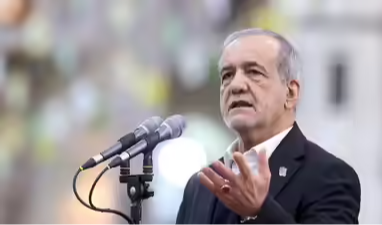
    Reports Claim Iranian President Offered Resignation Amid Ongoing Political Uncertainty

    17 hours ago


    Yugcharan News / 01 June 2026

    Fresh reports circulating in international media have triggered widespread discussion about the political situation in Iran after claims emerged that President Masoud Pezeshkian may have submitted his resignation to the country's top leadership. While the reports have attracted significant attention across political and financial circles, Iranian authorities have not officially confirmed the development, leaving observers waiting for clarity on the matter.

    The claims first surfaced through a foreign-based media outlet that cited unnamed sources familiar with internal developments in Tehran. According to the report, the Iranian President allegedly submitted a letter expressing concerns over the functioning of the government and the growing influence of powerful institutions in major decision-making processes.

    However, as of Monday, no official statement had been released by the Iranian government, the President's office, or other state institutions confirming that a resignation had been offered or accepted. The lack of formal confirmation has led analysts and diplomats to treat the reports with caution while continuing to monitor developments closely.

    Unverified Claims Trigger Political Discussion

    According to the media report, the alleged resignation letter highlighted concerns regarding the balance of authority within the country's governing structure. Sources quoted in the report claimed that key policy decisions were increasingly being handled outside the direct control of elected officials.

    The report suggested that the President had allegedly raised concerns about the ability of the civilian administration to effectively implement policies and carry out its constitutional responsibilities under the existing circumstances.

    While such claims have generated considerable interest, independent verification remains unavailable. Political analysts note that reports involving internal government matters in Iran are often difficult to confirm due to limited access to official information and the sensitive nature of national political affairs.

    As a result, experts have advised against drawing conclusions until formal announcements are made by relevant authorities.

    Official Silence Fuels Speculation

    One of the primary reasons the report has gained attention is the absence of any immediate official response. Neither Iranian state media nor senior government officials have publicly addressed the resignation claims.

    In political situations involving senior leadership figures, official confirmation is generally considered crucial before any conclusions can be reached. Without such confirmation, observers say it remains unclear whether the reported resignation reflects an actual political development or merely ongoing speculation.

    The silence from official channels has created room for differing interpretations among political commentators and regional experts. Some believe the report could indicate genuine disagreements within the political establishment, while others argue that it may simply be based on incomplete or unverified information.

    Several analysts have also pointed out that periods of heightened geopolitical tension often give rise to conflicting reports and rumors, making careful verification especially important.

    Regional Context Adds Significance

    The timing of the report has drawn additional attention because it comes during a period of heightened tensions across West Asia.

    Iran remains at the center of several important diplomatic and security developments involving regional and international powers. Ongoing negotiations related to regional stability, security concerns, and broader geopolitical issues have placed the country under intense international scrutiny.

    In recent weeks, diplomatic contacts between Iran and foreign governments have continued despite significant disagreements on several major issues. At the same time, military and security developments across the region have increased concerns about the possibility of further escalation.

    Against this backdrop, any suggestion of political change within Iran's leadership structure is likely to attract considerable attention from governments, investors, and international organizations.

    Experts note that political stability is often viewed as a key factor in determining the direction of diplomatic negotiations and economic policy. Consequently, reports regarding senior leadership changes can influence perceptions even before their accuracy is confirmed.

    Impact on Financial Markets

    The resignation claims quickly became a topic of discussion among traders and investors worldwide.

    Financial markets closely monitor developments involving Iran because of the country's strategic importance in global energy markets and regional geopolitics. News suggesting potential political uncertainty can influence market sentiment, particularly in sectors linked to energy, commodities, and international trade.

    Following the circulation of the reports, discussions intensified across trading platforms and investment communities. Some participants questioned the reliability of the claims, while others speculated about the possible implications if the reports were eventually confirmed.

    Market analysts noted that uncertainty often contributes to increased volatility, especially when it involves countries that play an important role in global energy supply chains.

    Although there was no immediate confirmation of any political change, the report nevertheless became a factor influencing investor sentiment and market discussions.

    Mixed Reactions Among Observers

    Reactions to the report have varied considerably among political analysts, commentators, and members of the public.

    Some observers believe that the claims could reflect genuine differences within Iran's political system regarding policy priorities and governance. Others argue that without official confirmation, the report should be treated cautiously and viewed primarily as an unverified claim.

    A number of experts have emphasized that leadership structures in Iran involve multiple institutions and decision-making bodies, making it difficult to assess internal dynamics based solely on anonymous reports.

    Political scientists studying the region note that speculation surrounding leadership changes is not uncommon during periods of international tension. In many cases, such reports are later clarified, denied, or revised after additional information becomes available.

    As a result, most analysts continue to adopt a wait-and-watch approach until official statements provide greater clarity.

    Diplomatic Negotiations Continue

    While attention has focused on the resignation claims, diplomatic efforts involving Iran remain ongoing.

    Recent statements from Iranian officials have indicated that discussions and message exchanges with international counterparts continue through various channels. Government representatives have suggested that reports and speculation regarding ongoing negotiations should be viewed cautiously until concrete outcomes are announced.

    Diplomatic observers believe that maintaining communication channels remains important, particularly during periods of heightened regional tension. Continued dialogue can help reduce misunderstandings and provide opportunities for future agreements on key issues.

    The reported resignation, if eventually confirmed, could potentially influence the pace and direction of such negotiations. However, experts caution that it is too early to assess any potential impact given the absence of verified information.

    Questions Remain Unanswered

    At present, several important questions remain unresolved.

    There is no official confirmation that a resignation letter exists. There has been no announcement regarding whether any resignation has been submitted, reviewed, accepted, or rejected. Additionally, the alleged contents of the reported communication have not been independently authenticated.

    The lack of clarity has left analysts relying largely on unofficial reports and secondary sources.

    Observers expect that any significant political development involving the country's leadership would eventually be addressed through official channels. Until then, uncertainty is likely to continue surrounding the issue.

    International Community Watching Closely

    Governments and international organizations are expected to monitor the situation carefully in the coming days.

    Iran occupies a significant position in regional and international affairs, and any major political developments within the country can attract global attention. Diplomatic missions, foreign ministries, and policy analysts are likely to assess any future announcements for their potential implications.

    Experts note that political transitions, when they occur, can influence both domestic priorities and international relationships. However, without confirmation that any transition is actually underway, speculation remains limited to unofficial reporting and commentary.

    Awaiting Official Clarification

    For now, the reports regarding President Masoud Pezeshkian's alleged resignation remain unconfirmed. While the claims have generated substantial discussion across political, diplomatic, and financial circles, no authoritative evidence has emerged to verify them.

    Analysts continue to emphasize the importance of relying on official statements rather than speculation. Until Iranian authorities provide clarification, the reported resignation should be treated as an unverified development rather than an established fact.

    The coming days may provide greater insight into the situation as observers await responses from government institutions and senior officials. Whether the reports prove accurate or not, the episode highlights the intense international attention currently focused on Iran and the broader geopolitical challenges facing the region.

    As developments unfold, governments, markets, and regional observers will continue to watch closely for any indication of changes within Iran's political leadership and what such changes could mean for the future of the region.


    Click here to Read More
    Previous Article
    Oil Prices Jump Over 2% as West Asia Tensions Escalate Amid Fresh Military Exchanges
    Next Article
    CBSE Reviews Digital Security Measures After Reported Concerns Over Examination Portal

    Related International Updates:

    Are you sure? You want to delete this comment..! Remove Cancel

    Comments (0)

      Leave a comment