Search

    Language Settings
    Select Website Language

    GDPR Compliance

    We use cookies to ensure you get the best experience on our website. By continuing to use our site, you accept our use of cookies, Privacy Policy, and Terms of Service.

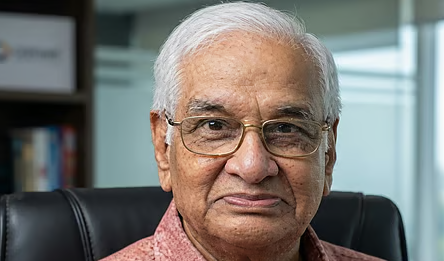
    Justice RC Chavan Resigns From Maharashtra UCC Panel: Who Is the Former Bombay High Court Judge and Why Did He Quit?

    8 hours ago

    Yugcharan News / 22-09-2026

    Retired Bombay High Court judge Justice RC Chavan has resigned from the Maharashtra government-appointed committee examining the Uniform Civil Code (UCC), citing concerns over the manner in which public feedback was being sought and the participation of a person who was not a committee member in a recent meeting.

    Justice Chavan reportedly submitted his resignation on September 19, shortly after the committee held its second meeting. The Maharashtra government accepted his resignation on September 21. His departure comes at an early stage of the panel's work, as the committee is preparing a process for obtaining public views before proceeding further with its recommendations.

    The seven-member committee, headed by retired Supreme Court Justice Ranjana Desai, was constituted by the Maharashtra government to examine and prepare a framework for a Uniform Civil Code in the state. The panel includes former Bombay High Court judges Justice RC Chavan and Justice SG Mehare, along with former Maharashtra Chief Secretary DK Jain, former Advocate General Virendra Saraf, Constitution expert Ramesh Patange and educationist and social activist Suvarna Rawal.

    Why Did Justice RC Chavan Resign?

    Justice Chavan's resignation followed the committee's second meeting, held online on September 19. According to a report by The Indian Express, one of the principal issues discussed during the meeting was the questionnaire that would be used to obtain public feedback on the proposed UCC exercise.

    In an email cited by the newspaper, Justice Chavan said that some members had attempted to put forward suggestions regarding the questionnaire. Among the suggestions, he said, were that respondents could be asked to answer questions only with a "yes" or "no" and that the questionnaire could be professionally examined by professors under the supervision of committee member Dr Suvarna Rawal.

    Justice Chavan, however, said that the committee chairperson had already circulated a questionnaire that had been finalised and indicated that it would be uploaded once the website for receiving responses was ready.

    He said he subsequently logged out of the meeting after believing that the relevant agenda item had effectively been completed.

    The former judge reportedly explained that his own understanding of the committee's exercise was that it was intended to obtain the views of people across Maharashtra and help build consensus around issues that could potentially be addressed through a common civil framework.

    He referred in his email to matters including late marriages, infertility, unstable marriages and delays in the dispute-resolution process. Justice Chavan said he later understood the objective differently, namely that the exercise would provide people with an opportunity to respond to predetermined questions, with responses structured in a manner that would make the resulting data easier to analyse.

    Concern Over Participation of a Non-Member

    Justice Chavan also raised another issue concerning the September 19 meeting.

    According to the report, he said that a person who was not a member of the committee attended the meeting. The individual reportedly commented on the website prepared by state officials and suggested that further modifications were necessary.

    Justice Chavan said the committee chairperson subsequently directed the concerned officials to make the required changes within a week.

    In his resignation communication, Justice Chavan questioned the role of the person who had participated in the meeting despite not being a member of the panel. He said he did not know where the individual fitted into the committee's structure.

    Justice Chavan further said that the episode led him to speculate about the role of state officials involved in the technical work. He ultimately said that he was stepping down so that the government could fill the vacancy promptly.

    At the same time, he described his time on the committee as a learning experience and said that the subject was one close to his heart. He also indicated that, after resigning, he would remain free as a citizen to express his views on the issue.

    The Indian Express reported that the meeting had a three-point agenda. It included confirmation of the minutes of the committee's previous meeting, discussion of the website being developed to receive public feedback and discussion of the process for gathering opinions on the UCC.

    Who Is Justice RC Chavan?

    Justice RC Chavan is a former judge of the Bombay High Court with a judicial career spanning several decades.

    Born on April 12, 1952, he entered the Maharashtra judicial service on March 1, 1976, when he was appointed Civil Judge (Junior Division) and Judicial Magistrate First Class.

    He was promoted to Civil Judge (Senior Division) in July 1985 and became an Additional District and Sessions Judge in March 1987.

    During his judicial career, Justice Chavan served in several positions across Maharashtra and adjoining jurisdictions. He worked as an Additional District and Sessions Judge at Jalgaon and Thane and later served as a Joint District and Sessions Judge at Nashik.

    Between 1990 and 1994, he served as Joint Director of the Judicial Officers Training Institute in Nagpur, a position involving the training and professional development of judicial officers.

    He subsequently served as a District and Sessions Judge in Nanded, Aurangabad, Daman and Diu, and Pune.

    Career at the Bombay High Court

    Justice Chavan also held several important administrative positions within the Bombay High Court.

    He served as Additional Registrar and Registrar before becoming the first Registrar General of the Bombay High Court. He was elevated as a judge of the Bombay High Court on June 22, 2005.

    His tenure as a High Court judge continued until his retirement in 2013.

    His career has also been associated with judicial administration and technological modernisation. He has been credited with pioneering work connected with the e-court system in India.

    After his elevation to the High Court, he continued to be associated with judicial and institutional responsibilities. He was appointed as a judge of the Special Court (TORTS), Bombay, on November 19, 2012, and later served as chairman of the Maharashtra State Consumer Disputes Redressal Commission.

    Justice Chavan's Work Beyond the Bench

    Justice Chavan's interests after retirement extended beyond judicial and administrative work into literature.

    He authored books including Cries in Wilderness and More Cries in Wilderness, in which he expressed his views on different aspects of law and the functioning of the judiciary.

    He also wrote the novel Yes My Lords, It's You in the Mirror, which follows the journey of four friends in the judicial system.

    He is also working on another literary title, Who Killed Rule of Law, according to the information cited in the report.

    His literary work has provided another avenue for him to discuss the legal system, judicial institutions and questions concerning the rule of law.

    Maharashtra's UCC Committee and Its Mandate

    Justice Chavan's resignation comes as Maharashtra's UCC committee is still in the early stages of its work.

    The state government announced the formation of the seven-member panel in 2026, with retired Supreme Court judge Justice Ranjana Desai as its chairperson. The committee was tasked with examining the issue and preparing a framework concerning the implementation of a Uniform Civil Code in Maharashtra.

    The committee's work involves consultation and preparation before any proposed legal framework is considered by the state government. Public participation is therefore an important part of the process currently being discussed by the panel.

    The resignation has brought attention to the internal functioning of the committee, particularly its approach to public consultation and the process through which feedback will be collected.

    The Indian Express had earlier reported that Maharashtra's committee had held only one meeting since its formation before moving towards the consultation stage. The state government has indicated that public consultation is expected to precede preparation of the draft, while Maharashtra Chief Minister Devendra Fadnavis has previously indicated that the government could consider introducing legislation after the committee completes its work.

    What Happens Next?

    Justice Chavan's resignation leaves the Maharashtra government with a vacancy on the seven-member panel. In his resignation email, he himself referred to the need for the government to fill the vacant position promptly.

    The immediate focus of the committee is expected to remain on establishing the mechanism through which citizens can submit their views on the UCC. The website intended for receiving feedback is also undergoing changes following the discussions raised during the September 19 meeting.

    The resignation does not by itself bring the committee's work to an end. The remaining members are expected to continue with the consultation and drafting process under the chairmanship of Justice Ranjana Desai.

    The episode has, however, highlighted the importance of defining the consultation process, the responsibilities of individual members and the role of officials or outside participants involved in the committee's work.

    For Justice RC Chavan, the resignation marks a departure from a committee whose subject he described as being personally important to him. His stated concerns centred on how public opinion would be gathered and how the committee's internal process was being conducted. The Maharashtra government will now have to decide on his replacement as the panel proceeds with its broader task of examining the Uniform Civil Code for the state.

    Click here to Read More
    Previous Article
    Indian Refiners May Cut Russian Oil Purchases as US Tariff Threat Raises Risk
    Next Article
    Maharashtra FDA Suspends Food Licences of Swiggy Instamart, Amazon Warehouse in Mumbai Over Hygiene Violations

    Related National Updates:

    Are you sure? You want to delete this comment..! Remove Cancel

    Comments (0)

      Leave a comment