Yugcharan News / 21-09-2026
Tensions between Iran and the United States have intensified further after Washington and Tehran exchanged fresh threats, while attacks claimed by Yemen’s Houthi group against Saudi Arabia added another dangerous front to the wider Middle East conflict. The latest developments have also increased pressure on global energy supplies as disruptions continue around the Strait of Hormuz and the Bab el-Mandeb Strait.
US President Donald Trump warned Iran that it could face severe economic consequences or a threat to its leadership if Tehran did not reach an agreement with Washington. At the same time, Iran's military leadership warned that any fresh US attack would trigger sustained retaliation against American bases and interests in the region.
The escalation comes as Iranian President Masoud Pezeshkian is expected to travel to New York for the United Nations General Assembly, creating a possible opportunity for diplomatic contacts between the two sides. Trump has indicated that he would be open to meeting Pezeshkian, even as his administration continues to apply pressure on Tehran.
Fresh Threats Between Washington and Tehran
The latest confrontation reflects the continuing deadlock between Iran and the United States after months of conflict. According to Reuters, Trump said Iran's leadership should reach a deal rather than allow the country's economy to deteriorate, while also leaving open the possibility of a meeting with the Iranian president.
Iran's military central command, meanwhile, issued a warning that any new attack would be met with sustained retaliation against US bases and interests. Iranian officials also indicated that regional countries supporting or assisting a potential American attack could be treated as parties to the conflict.
Iranian authorities said they had information suggesting that another attack was being prepared, although they did not provide details supporting the claim. The United States has separately warned that the security situation in the Middle East could escalate rapidly.
The exchange of threats comes despite the possibility of diplomatic engagement at the United Nations. The competing messages from Washington and Tehran underline the gap between the two sides, with neither appearing ready to make the concessions required to restore a lasting ceasefire.
Houthi Attacks Add a New Regional Front
The conflict has expanded beyond direct confrontation between the United States and Iran. Yemen's Iran-aligned Houthi movement has intensified attacks against Saudi Arabia, creating additional concerns for Gulf security and international shipping.
On Saturday, the Houthis claimed responsibility for missile and drone attacks targeting what they described as sensitive locations in Riyadh. Large plumes of smoke were reported near the Saudi capital's main airport after explosions and alerts were reported overnight. Reuters footage and photographs showed a large column of black smoke in the airport area.
Saudi authorities did not immediately confirm the Houthi account of the attacks. A Saudi-led coalition fighting the Houthis said it had intercepted or prevented other attacks against the kingdom.
The attacks have nevertheless raised concerns because Saudi Arabia is a major global oil producer and hosts critical energy infrastructure. Any sustained disruption to its production, transportation or export routes could have consequences for international oil markets.
The renewed Houthi activity follows major developments in Yemen, where the group has made advances along parts of the Red Sea coastline. Reuters has reported that the Houthi gains have increased the group's ability to threaten shipping routes near the Bab el-Mandeb Strait.
Strait of Hormuz Remains Under Pressure
One of the most serious consequences of the continuing conflict is the disruption to major maritime routes used to transport energy.
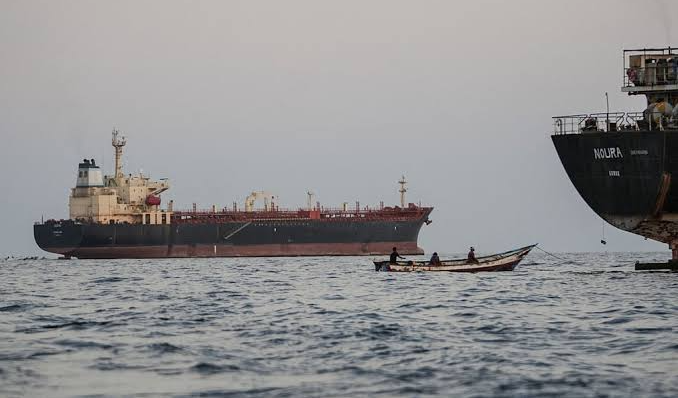
The Strait of Hormuz is a crucial passage for oil and gas shipments leaving the Persian Gulf. Iran has maintained a blockade affecting much of the shipping through the waterway, while the United States has also imposed measures affecting Iran's ability to export its own oil.
The situation has been further complicated by developments around the Bab el-Mandeb Strait, which connects the Red Sea with the Gulf of Aden. Houthi control and military activity along Yemen's Red Sea coastline have created another potential threat to commercial shipping between Asia and Europe.
Together, the disruptions have placed additional pressure on global energy markets. The possibility of simultaneous restrictions around two strategically important waterways has raised concerns about the reliability and cost of energy transportation.
Reuters reported that the conflict has already contributed to major disruption in regional energy flows, although oil exports have continued through alternative routes and arrangements.
Global Oil Markets Closely Watch the Conflict
Oil traders and governments around the world are closely monitoring developments because the Middle East remains central to global crude supplies.
On Monday, September 21, Reuters reported that Brent crude futures were trading higher after the Houthi attacks on Saudi Arabia, reflecting renewed concerns about regional supply risks. Brent rose 81 cents, or 0.78%, to $104.68 a barrel, while US West Texas Intermediate crude gained 76 cents, or 0.76%, to $101.06 a barrel by 2202 GMT.
The movement in oil prices demonstrates how quickly geopolitical developments can affect energy markets. Traders are weighing the risk of further disruptions against signs that diplomatic efforts could eventually improve the situation.
Despite the attacks and continuing tensions, Reuters reported that Saudi oil exports had increased during September as the kingdom used available routes to compensate for disruptions affecting the Strait of Hormuz. This has helped prevent an even sharper reduction in global supplies.
However, the situation remains uncertain because further attacks could threaten infrastructure, shipping routes and alternative export channels.
Ceasefire Efforts Remain Uncertain
The conflict has also raised questions about the future of the interim ceasefire agreement reached in June.
According to the Reuters report, the ceasefire broke down in July following disagreements over its terms. Iran has since maintained that it will not reopen the Strait of Hormuz until the conditions of the June agreement, as interpreted by Tehran, are fulfilled.
Iranian Parliament Speaker Mohammad Baqer Qalibaf said the country would have to continue both fighting and negotiations in an effort to resist its opponents while using diplomacy to consolidate any gains.
The position indicates that Tehran is keeping diplomatic channels open while simultaneously maintaining a military posture.
For Washington, the challenge is similarly complicated. Trump has continued to issue strong warnings against Iran while also indicating that he could meet Pezeshkian. The possibility of direct talks at the United Nations therefore remains an important development to watch.
Saudi Arabia Faces Growing Security Pressure
Saudi Arabia has found itself increasingly exposed to the widening regional conflict.
The Houthi attacks have created a difficult situation for Riyadh because continued military operations against the group could carry the risk of additional attacks on Saudi territory and critical infrastructure. At the same time, reducing military pressure could allow the Houthis to consolidate their territorial and strategic gains in Yemen.
Reuters has reported that the Houthi advance along Yemen's Red Sea coast has placed the group closer to important maritime routes. The development has implications not only for Saudi Arabia but also for international shipping and global energy markets.
The United States has issued security warnings to Americans in the region, citing the possibility of further escalation, flight disruptions and airspace closures.
International Diplomacy Comes Under Focus
With the United Nations General Assembly taking place in New York, international attention is turning toward the possibility of diplomatic discussions involving the United States and Iran.
Trump's reported willingness to meet Pezeshkian provides one possible channel for direct engagement, although there has been no indication that such a meeting would automatically result in a new agreement.
The wider regional situation is also expected to feature prominently in diplomatic discussions involving Gulf countries and other major powers.
China has separately urged Iran to help restrain the Houthis, according to Reuters reporting, following an appeal from Saudi Arabia. The development highlights the growing international concern over the effect of the conflict on regional stability and energy supplies.
Energy Security Remains the Central Concern
The continuing conflict has transformed the Middle East crisis into a major global energy issue.
The Strait of Hormuz and Bab el-Mandeb are both strategically important shipping routes. Any prolonged disruption can increase transportation costs, delay deliveries and force energy exporters and importers to rely on alternative routes.
For oil-importing countries, higher crude prices can increase the cost of transportation, manufacturing and other economic activities. Governments and energy companies are therefore monitoring the situation closely.
At the same time, the latest market movements show that supply has not completely stopped. Saudi Arabia has increased exports through alternative channels, while some oil continues to reach international markets despite the disruptions.
The direction of global energy prices will depend heavily on whether the conflict spreads further or whether diplomatic engagement begins to reduce tensions.
What Happens Next
The immediate focus is likely to remain on the possibility of further US-Iran confrontation, the situation around Saudi Arabia and Yemen, and diplomatic activity at the United Nations.
For now, both Washington and Tehran continue to issue strong warnings, while simultaneously leaving some space for negotiations. The Houthi attacks have added another layer of uncertainty and increased the risks surrounding regional shipping and energy infrastructure.
The situation remains fluid, with developments in one part of the region capable of quickly affecting oil prices, shipping routes and international diplomacy.
As world leaders gather at the United Nations, the possibility of renewed diplomatic engagement will be closely watched. At the same time, the continuing military threats and attacks demonstrate that the conflict remains unresolved.
For global markets, the central concern will be whether the latest escalation remains contained or develops into a wider disruption of Middle Eastern energy supplies. For governments across the region, the priority remains preventing further attacks on critical infrastructure and keeping vital maritime routes open.
The coming days, particularly the diplomatic meetings surrounding the United Nations General Assembly, could therefore prove significant for the direction of the conflict and its wider economic consequences.