Search

    Language Settings
    Select Website Language

    GDPR Compliance

    We use cookies to ensure you get the best experience on our website. By continuing to use our site, you accept our use of cookies, Privacy Policy, and Terms of Service.

    Delhi High Court Refers Online IP Jurisdiction Questions to Larger Bench, Says Internet Access Alone Cannot Determine Territorial Jurisdiction

    5 hours ago


    Yugcharan News / 26 August 2026

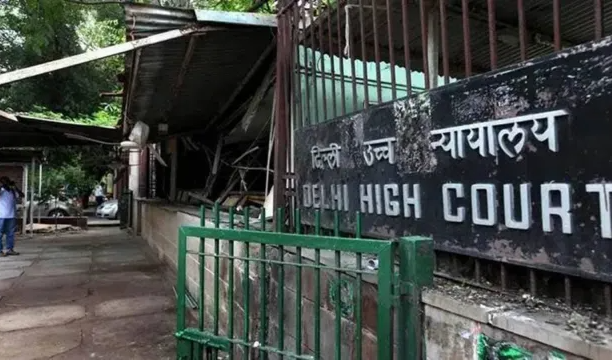
    The Delhi High Court has referred important questions concerning territorial jurisdiction in intellectual property disputes to a larger bench, observing that the mere online availability of products, advertisements or commercial content across India cannot automatically allow a company to institute an intellectual property suit in any court of its choice.

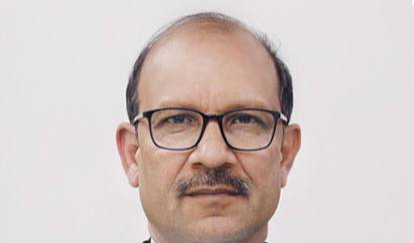
    Justice Anup Jairam Bhambhani made the observations while hearing a dispute between Hindustan Unilever Limited (HUL) and Kwick Living (India) Private Limited. The Court found that previous judgments dealing with territorial jurisdiction in online intellectual property disputes appeared to have adopted different approaches.

    The issue has gained importance with the growing use of e-commerce, social media, digital advertising and websites for commercial activities. The Court noted that while internet-based transactions can make products and advertisements accessible across geographical boundaries, this accessibility cannot by itself render territorial jurisdiction so broad that a plaintiff can approach virtually any court in the country.

    Dispute Between HUL and Kwick Living

    The matter originated from a suit filed by Hindustan Unilever Limited against Kwick Living. HUL sought to restrain Kwick Living from publishing an advertising campaign titled War on What's Hidden.

    According to the case details, HUL alleged that the campaign targeted its Vim and Surf Excel products and contained claims that were unsubstantiated and misleading.

    Kwick Living, however, challenged the territorial jurisdiction of the Delhi High Court to entertain the proceedings.

    Both companies have their registered offices in Mumbai. Kwick Living reportedly argued that HUL had specifically relied upon a disputed hoarding located in Mumbai and, therefore, the Delhi High Court did not have the necessary territorial connection with the dispute.

    HUL took a different position. It submitted that the company maintained a corporate office in Delhi and that the disputed advertising campaign was available online through platforms including YouTube, Instagram and Kwick Living's website.

    The company further argued that consumers located in Delhi could access the campaign and purchase products through the online platforms. On this basis, HUL contended that at least part of the cause of action had arisen within Delhi.

    Internet Accessibility and Territorial Jurisdiction

    Justice Bhambhani examined the competing arguments against the background of existing legal principles governing territorial jurisdiction in intellectual property cases.

    The Court observed that the expansion of the internet has created new challenges for determining where an online commercial dispute can legitimately be filed.

    A website can potentially be accessed from almost every part of the country. Similarly, an online advertisement may be viewed by consumers in numerous jurisdictions without the advertiser necessarily having a physical establishment or deliberately targeting consumers in each of those locations.

    The Court therefore cautioned against treating simple internet accessibility as sufficient to establish territorial jurisdiction.

    Justice Bhambhani reportedly observed that the development of the internet should not result in the established principles of territorial jurisdiction becoming so broad or uncertain that corporations can choose virtually any location in India to institute intellectual property litigation.

    According to the Court, such an interpretation could undermine the basic concept of territorial jurisdiction.

    Three Important Questions Referred to Larger Bench

    In view of apparent differences in earlier decisions, the Court referred three questions for consideration by a larger bench.

    The first concerns the statutory basis for territorial jurisdiction in intellectual property cases. The larger bench will consider whether such suits are governed exclusively by Section 20 of the Code of Civil Procedure, by Section 134 of the Trade Marks Act, by Section 62 of the Copyright Act, or by an interaction between these provisions.

    The second question concerns corporate plaintiffs. The larger bench will examine whether a company must institute proceedings at the location of its principal or registered office when part of the cause of action has arisen at that location.

    The third and particularly significant question relates to online transactions. The larger bench will consider what jurisdictional principle should apply to intellectual property disputes involving online commercial activity, especially in light of differing approaches adopted in earlier Delhi High Court decisions.

    Conflicting Approaches in Earlier Cases

    The Court's decision to seek a larger bench was influenced by what it considered conflicting legal approaches.

    Some earlier decisions have reportedly emphasised the need to establish that a website or online business specifically targeted consumers within the territorial jurisdiction of a particular court.

    Under such an approach, simply showing that a website can be accessed in a particular city would not necessarily be enough. There would need to be some additional connection between the online activity and the jurisdiction.

    Other decisions, however, have taken a broader approach and suggested that the ability of consumers to complete an online commercial transaction from a particular location may itself have relevance when determining territorial jurisdiction.

    The differences between these approaches have created uncertainty for businesses and litigants involved in online intellectual property disputes.

    The Delhi High Court has now sought an authoritative determination from a larger bench so that a clearer legal framework can emerge.

    Why the Ruling Could Matter for Online Businesses

    The issue has implications beyond the parties involved in the HUL-Kwick Living dispute.

    Businesses increasingly advertise and sell their products through websites, social media platforms, online marketplaces and digital advertising networks. Unlike traditional physical commerce, online activity can reach customers across multiple States and cities simultaneously.

    If mere accessibility of an online advertisement or product were sufficient to establish jurisdiction, a company could potentially face litigation in numerous courts across India.

    This could create uncertainty for businesses and increase the cost and complexity of intellectual property litigation.

    The Court's observations indicate that there must be a meaningful territorial connection between the dispute and the court hearing the case rather than jurisdiction being based solely on the technical availability of internet content.

    At the same time, the larger bench will have to balance this concern with the legitimate interests of trademark and copyright owners whose rights may be affected by online activity occurring across multiple jurisdictions.

    HUL's Interim Relief Request

    During the proceedings, HUL had also sought interim relief against the advertising campaign.

    However, the Court did not pass any direction on HUL's request for interim relief while referring the jurisdictional questions to a larger bench.

    The immediate dispute therefore remains connected to the larger question of whether the Delhi High Court can properly exercise jurisdiction over the case.

    The Court directed the Registry to place the judgment before the Chief Justice within one week. The Chief Justice will consider whether a larger bench should be constituted to decide the questions referred by Justice Bhambhani.

    Legal Arguments Before the Court

    HUL was represented by Senior Advocates Amit Sibal and Swathi Sukumar, assisted by advocates from Saikrishna & Associates.

    Kwick Living was represented by Senior Advocate Chander M. Lall, assisted by lawyers from Fidus Law Chambers.

    The case has drawn attention within intellectual property law circles because the larger bench's eventual decision could clarify how courts should approach territorial jurisdiction when disputes arise from digital advertisements, online sales and internet-based commercial activity.

    A Potentially Significant Clarification for IP Litigation

    The Delhi High Court's decision comes at a time when the distinction between physical and digital commerce is becoming increasingly difficult to maintain.

    Traditional jurisdictional rules generally rely on identifiable territorial connections such as the location of parties, the place where an act occurred or where a part of the cause of action arose.

    Online commerce complicates this framework because the same advertisement, product listing or digital service can be accessible simultaneously in hundreds of locations.

    The larger bench will therefore have the opportunity to establish whether accessibility alone is sufficient in certain circumstances or whether additional factors, such as targeted commercial activity, actual transactions, consumer interaction or other territorial connections, must be demonstrated.

    The outcome could provide greater certainty to both intellectual property owners and online businesses.

    For now, the Delhi High Court has not finally resolved the jurisdictional issue in the HUL-Kwick Living dispute. Instead, it has identified the conflicting legal approaches and placed the questions before a larger bench for an authoritative determination.

    The case could consequently become an important reference point for future trademark, copyright and other intellectual property disputes involving e-commerce, websites, social media and digital advertising.

    Click here to Read More
    Previous Article
    Justice Sandeep Mehta Seeks Replacement of Rajasthan High Court Acting Chief Justice SP Sharma, Raises Concerns Over Administration
    Next Article
    Delhi High Court Gives Six Weeks to Slum Residents Near PM’s Residence to Vacate Premises

    Related National Updates:

    Are you sure? You want to delete this comment..! Remove Cancel

    Comments (0)

      Leave a comment