Search

    Language Settings
    Select Website Language

    GDPR Compliance

    We use cookies to ensure you get the best experience on our website. By continuing to use our site, you accept our use of cookies, Privacy Policy, and Terms of Service.

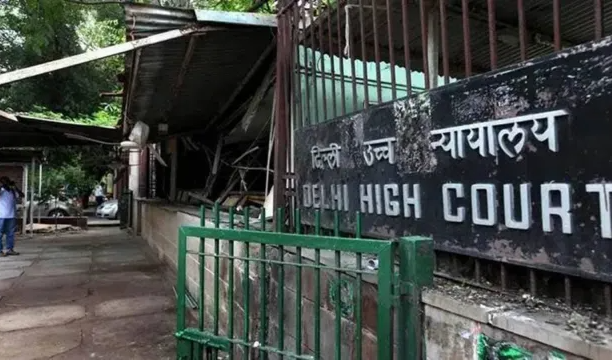
    Delhi High Court Gives Six Weeks to Slum Residents Near PM’s Residence to Vacate Premises

    5 hours ago

    Yugcharan News / 26 August 2026

    New Delhi: The Delhi High Court has granted a six-week period to more than 350 residents living in three slum clusters near the official residence of Prime Minister Narendra Modi to vacate the premises and shift to alternative accommodation provided under the government’s rehabilitation arrangement.

    The direction was issued on Tuesday by a Division Bench comprising Justice D.K. Upadhyay and Justice Tejas Karia. The court was hearing a matter concerning the removal of three settlements located in the vicinity of Lok Kalyan Marg, formerly known as Race Course Road, where the Prime Minister’s official residence is situated.

    According to reports, the three settlements involved are BR Camp, Masjid Camp and D.I.D. Colony. The court has directed residents of these areas to vacate the premises within six weeks. If the residents fail to comply with the order within the prescribed period, the authorities may proceed with eviction with the assistance of the police.

    Government Had Earlier Set a Deadline

    The issue has been under consideration for several months. The government had earlier initiated steps to clear the three settlements situated close to the Prime Minister’s official residence.

    Residents had reportedly been asked to vacate their homes by 6 March 2026. The direction was issued through the Land and Development Office under the Union Ministry of Housing and Urban Affairs.

    The authorities had not only planned the removal of the settlements but had also made arrangements for the rehabilitation of eligible families. Alternative accommodation was reportedly arranged through the Delhi Urban Shelter Improvement Board (DUSIB).

    The rehabilitation plan involved allotment of flats to residents in the DUSIB colony at Savda Ghevra, where alternative accommodation was made available for families affected by the relocation process.

    Despite the earlier deadline, the three settlements continued to remain occupied. The latest Delhi High Court order has now provided residents with another six weeks to complete the process of shifting.

    Court Sets a Time-Bound Relocation Process

    The latest direction effectively gives residents a final time-bound opportunity to relocate before enforcement action can be taken.

    The six-week period is intended to allow residents to move from the existing settlements to the alternative accommodation identified for them. However, those who do not comply within the stipulated period could face eviction with police assistance.

    The development highlights the continuing legal and administrative challenges surrounding the removal of informal settlements from areas where government agencies seek to undertake redevelopment, security-related or land-management measures.

    At the same time, the rehabilitation component remains an important aspect of the matter because the affected families are being directed towards alternative housing rather than being asked to leave without any stated relocation arrangement.

    Alternative Housing at Savda Ghevra

    The government’s rehabilitation plan reportedly includes flats in the DUSIB colony at Savda Ghevra. The objective is to provide an alternative location to families affected by the clearance of the three settlements.

    The Land and Development Office had earlier asked residents to move to the allotted accommodation by the March deadline. The fact that residents continued to occupy the original locations led to further proceedings and ultimately the latest judicial direction.

    For the affected families, the relocation represents a significant change in their place of residence. Moving from established settlements to a new colony can involve practical concerns relating to employment, education, transportation and access to public services.

    The court’s six-week deadline therefore gives residents a defined period in which to make arrangements and shift to the alternative accommodation.

    Location Near Prime Minister’s Residence

    The settlements are situated in the broader area surrounding Lok Kalyan Marg, one of the most closely monitored areas of the national capital because of the presence of the Prime Minister’s official residence and other important government establishments.

    The location of informal settlements in such a sensitive area has been an issue for government authorities. Land management, infrastructure requirements and security considerations can become particularly significant in areas surrounding residences and offices of senior constitutional and government functionaries.

    However, any relocation exercise involving a large number of families also raises questions about rehabilitation and the manner in which affected residents are shifted.

    In the present case, the authorities have cited an alternative housing arrangement through DUSIB, while the High Court has now imposed a specific timeline for vacating the existing settlements.

    Police Assistance If Residents Do Not Vacate

    One of the significant aspects of the latest order is the provision for enforcement if residents do not comply with the six-week deadline.

    The authorities may undertake the eviction process with police assistance if the settlements are not vacated within the time granted by the court.

    Such directions are generally intended to ensure that an order concerning possession or removal is implemented within a defined period rather than allowing the dispute to continue indefinitely.

    For the residents, the order means that the six-week period is crucial for completing the relocation process. Families who have been allotted alternative accommodation would need to make arrangements for shifting their belongings and settling at the new location.

    Rehabilitation Remains a Key Issue

    The question of rehabilitation is particularly important in cases involving slum clearance because many families may have lived in the same location for years.

    While the government has reportedly arranged alternative flats for eligible residents, the practical impact of relocation can extend beyond the provision of housing. Residents may also depend on their existing neighbourhoods for employment, schooling, markets, healthcare and transportation.

    A shift to another part of Delhi can therefore require families to reorganise several aspects of their daily lives.

    The court’s order, as reported, provides a specific six-week window for this transition. The implementation of the order and the manner in which rehabilitation is carried out will determine how smoothly the relocation takes place.

    Legal and Administrative Background

    The dispute reflects a broader issue frequently encountered in Delhi, where government agencies have sought to clear unauthorised or informal settlements from public land and other strategically important areas.

    Courts have previously dealt with cases involving the rights of residents, ownership or possession of land, rehabilitation policies and the authority of government agencies to remove encroachments.

    In such matters, courts may balance the requirements of public land management with applicable legal and rehabilitation safeguards.

    In the present case, the Delhi High Court has set a six-week deadline for the residents of BR Camp, Masjid Camp and D.I.D. Colony to vacate the premises. The direction also provides for police assistance if the deadline is not followed.

    What Happens Next?

    The immediate focus will now be on the implementation of the court’s order.

    The concerned authorities are expected to facilitate the relocation process and ensure that eligible residents can shift to the alternative accommodation that has reportedly been allotted to them.

    For residents who comply with the order, the coming weeks will involve the process of moving from the existing settlements to the designated rehabilitation colony at Savda Ghevra.

    If residents remain on the premises after the six-week period, enforcement action could follow in accordance with the court’s direction.

    The development is therefore significant not only for the more than 350 residents directly affected but also for the wider debate surrounding rehabilitation, public land management and the removal of informal settlements in Delhi.

    The case also demonstrates the role of the judiciary in setting clear timelines when administrative directions concerning relocation remain pending for an extended period.


    For now, the Delhi High Court’s order has established a six-week deadline. The manner in which the authorities implement the relocation and rehabilitation process will remain closely watched in the coming weeks.

    Click here to Read More
    Previous Article
    Delhi High Court Refers Online IP Jurisdiction Questions to Larger Bench, Says Internet Access Alone Cannot Determine Territorial Jurisdiction
    Next Article
    FSSAI Inspections at Two Major Delhi Aerocity Hotels Reveal Cockroaches, Flies and Expired Food

    Related National Updates:

    Are you sure? You want to delete this comment..! Remove Cancel

    Comments (0)

      Leave a comment