Yugcharan News / 25-11-2026
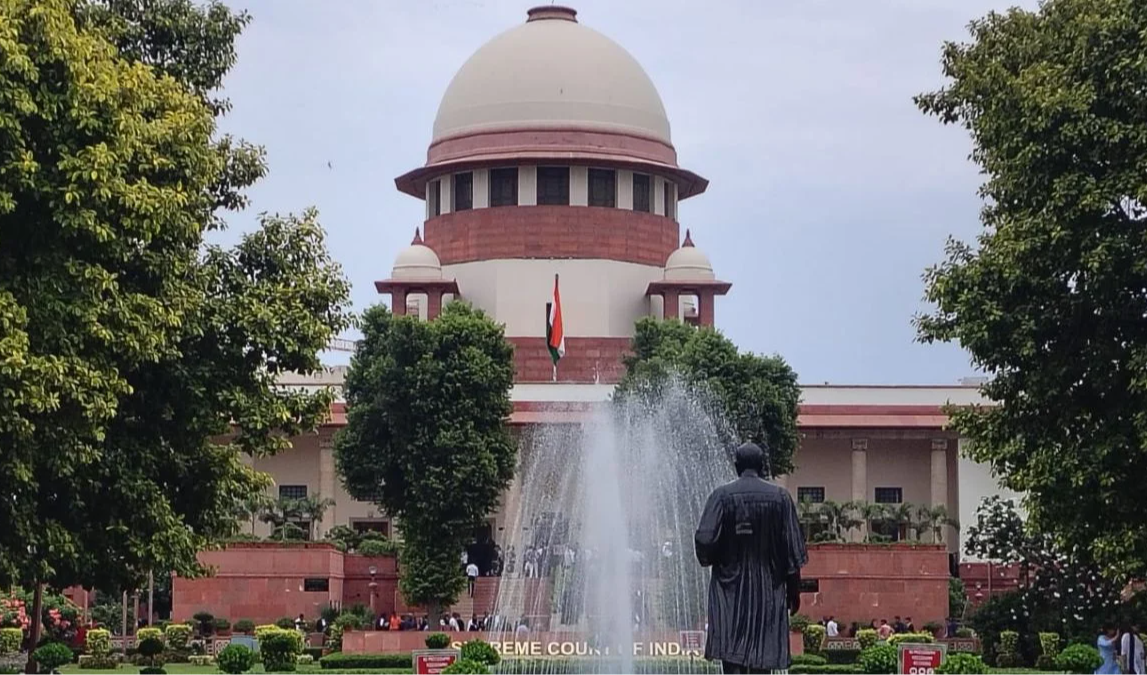
The Supreme Court of India on Wednesday set aside the Allahabad High Court orders directing the Central Bureau of Investigation (CBI) and the Enforcement Directorate (ED) to examine allegations of disproportionate assets against Congress leader and Leader of Opposition in the Lok Sabha Rahul Gandhi. The apex court remitted the matter to the Allahabad High Court for fresh consideration, directing that Gandhi be formally impleaded as a respondent and given an opportunity to present his arguments before any further orders are passed.
A three-judge Bench comprising Chief Justice of India (CJI) Surya Kant, Justice Joymalya Bagchi and Justice V Mohana ruled that the earlier proceedings before the High Court must begin afresh. The Bench also left all legal questions open, including objections concerning the maintainability of the original writ petition.
The Supreme Court directed that the matter be placed before the Chief Justice of the Allahabad High Court for the constitution of a fresh Bench. The newly constituted Bench will hear the case afresh in open court, ensuring that all concerned parties receive an opportunity to present their respective positions.
The order follows Rahul Gandhi's challenge to the High Court's directions, primarily on the ground that orders concerning him had been passed without providing him an opportunity to be heard.
Supreme Court Directs Fresh Hearing Before Allahabad High Court
While setting aside the challenged orders, the Supreme Court specifically instructed petitioner S. Vignesh Shishir to implead Rahul Gandhi as a respondent in the writ petition.
The apex court emphasised that Gandhi must be afforded an opportunity of hearing, particularly on the question of whether the petition itself is legally maintainable.
In its order, the Bench stated that all the orders under challenge passed by the Allahabad High Court stood set aside. It further directed that the proceedings be placed before the High Court's Chief Justice for the constitution of a fresh Bench, which would commence the hearing from the beginning in an open courtroom.
The Supreme Court also clarified that all contentions raised by the parties would remain open for consideration. This includes objections relating to the maintainability of the writ petition, meaning the newly constituted Bench will be able to examine the legal basis of the petition before proceeding further.
The direction to include Rahul Gandhi as a respondent is particularly significant because the earlier proceedings had resulted in directions concerning investigations into allegations against him without his participation as a party to the case.
BJP Worker S. Vignesh Shishir Had Sought Investigation
The proceedings originated from a petition filed by S. Vignesh Shishir, a BJP worker, who had sought an investigation into allegations concerning the assets of Rahul Gandhi and other members of his family.
In May 2026, the Allahabad High Court directed the CBI and ED to verify the claims raised by Shishir. The directions brought the two central investigative agencies into the matter and required them to examine the allegations placed before the court.
The High Court subsequently sought further information from the CBI regarding the status and progress of its inquiry. It directed the agency to submit a fresh affidavit explaining the steps taken and providing details about the investigation.
The court wanted a clearer account of the progress made by the agency following its earlier directions. However, the response filed by the CBI did not satisfy the High Court.
Allahabad High Court Had Expressed Dissatisfaction with CBI's Response
On July 20, the Allahabad High Court expressed dissatisfaction with the counter-affidavit submitted by the CBI, observing that the agency had not adequately addressed the questions raised in the court's earlier directions.
The Bench comprising Justice Brij Raj Singh and Justice Rajesh Singh Chauhan questioned whether the affidavit provided a meaningful account of the investigation.
In its observations, the High Court stated:
"The counter affidavit of CBI does not appear to be a counter affidavit in terms of earlier order. Even we are unable to understand about the progress of the investigation done by the CBI."
The observation reflected the court's concern that the information submitted by the investigative agency did not sufficiently explain the progress of the inquiry.
The High Court also made observations concerning the role of the Enforcement Directorate. It noted that the ED had taken the required steps and indicated that the agency would be free to proceed further if the investigation disclosed material warranting action.
These directions subsequently became part of the proceedings challenged by Rahul Gandhi before the Supreme Court.
Rahul Gandhi Questioned the Petitioner's Locus Standi
Challenging the Allahabad High Court's directions, Rahul Gandhi approached the Supreme Court and raised objections regarding the manner in which the proceedings had been initiated and conducted.
One of his principal arguments concerned the legal standing of the petitioner, S. Vignesh Shishir. Gandhi questioned whether Shishir had the necessary locus standi to institute the proceedings and sought to highlight that the petitioner had not adequately disclosed his credentials.
The question of locus standi relates to whether a person has the legal right or sufficient standing to approach a court in a particular matter.
Gandhi also raised concerns about how confidential proceedings and related information had subsequently appeared in newspaper reports.
His challenge focused on the manner in which directions affecting him had been issued without first providing him an opportunity to respond to the allegations or present his position before the High Court.
The Supreme Court's latest decision does not determine the merits of the allegations concerning disproportionate assets. Instead, it sets aside the earlier orders and sends the matter back for a fresh hearing, with the participation of Rahul Gandhi.
Supreme Court Had Earlier Questioned the Absence of a Hearing
The issue of procedural fairness had also come up during an earlier hearing before the Supreme Court on August 17.
At that stage, the apex court took note of the fact that the Allahabad High Court had passed orders concerning Rahul Gandhi without hearing him.
The Supreme Court questioned why directions affecting Gandhi had been issued without giving him an opportunity to present his position.
Following those observations, the apex court directed the Allahabad High Court to defer further proceedings in the matter.
The August hearing brought the issue of the right to be heard into focus. The Supreme Court's concern was centred on whether a person against whom judicial directions were being issued should have been given an opportunity to participate in the proceedings.
The November 25 ruling has now taken the matter further by setting aside the challenged High Court orders altogether and directing a fresh hearing before a newly constituted Bench.
The requirement to implead Gandhi as a respondent will ensure that he is formally included in the proceedings and can raise his objections before the High Court considers the matter again.
Senior Advocate Kapil Sibal Appeared for Rahul Gandhi
Senior Advocate Kapil Sibal appeared on behalf of Rahul Gandhi before the Supreme Court.
The arguments on Gandhi's behalf included objections to the petitioner's locus standi and the absence of an opportunity of hearing during the earlier proceedings before the Allahabad High Court.
The Supreme Court's directions provide a fresh procedural framework for the case. The newly constituted High Court Bench will have to consider the petition afresh, including the objections concerning its maintainability.
The court has not made any finding establishing the allegations against Gandhi, nor has it ruled on the substantive claims concerning his assets.
Separate Citizenship-Related Proceedings Also Pending Before Allahabad High Court
Apart from the disproportionate assets matter, S. Vignesh Shishir has filed another petition before the Allahabad High Court seeking criminal action against Rahul Gandhi over alleged violations of citizenship laws.
In the separate proceedings, Shishir has claimed that Gandhi held a British passport in addition to his Indian passport. These assertions form part of the allegations raised in that petition and have not been established as facts by the court.
The citizenship-related case has followed a separate procedural course. According to the available details, the High Court had initially directed the registration of a First Information Report (FIR) against Gandhi.
However, the judge subsequently withheld that direction and recused himself from hearing the matter after Shishir made certain social media posts concerning the case.
The proceedings remain pending before the Allahabad High Court.
The citizenship-related petition is separate from the disproportionate assets matter considered by the Supreme Court on Wednesday. The November 25 ruling specifically concerns the orders directing the CBI and ED to examine the allegations relating to Gandhi's assets.
Matter Returns to High Court for Fresh Consideration
With its latest decision, the Supreme Court has restored the matter to the Allahabad High Court for consideration through a fresh judicial process.
The High Court's Chief Justice will constitute a new Bench, which will hear the petition from the beginning in open court. Shishir will also be required to formally include Rahul Gandhi as a respondent.
The new Bench will first have to consider the legal objections raised by the parties, including whether the writ petition is maintainable. Rahul Gandhi must be given an opportunity to be heard on this issue before the court proceeds further.
Importantly, the Supreme Court's decision should not be interpreted as a final determination of the allegations concerning disproportionate assets. The allegations remain subject to judicial consideration, and the apex court has not expressed any conclusion on their factual or legal merits.
The next stage of the proceedings will therefore depend on the fresh consideration undertaken by the Allahabad High Court in accordance with the Supreme Court's directions.