Yugcharan News / 25-11-2026
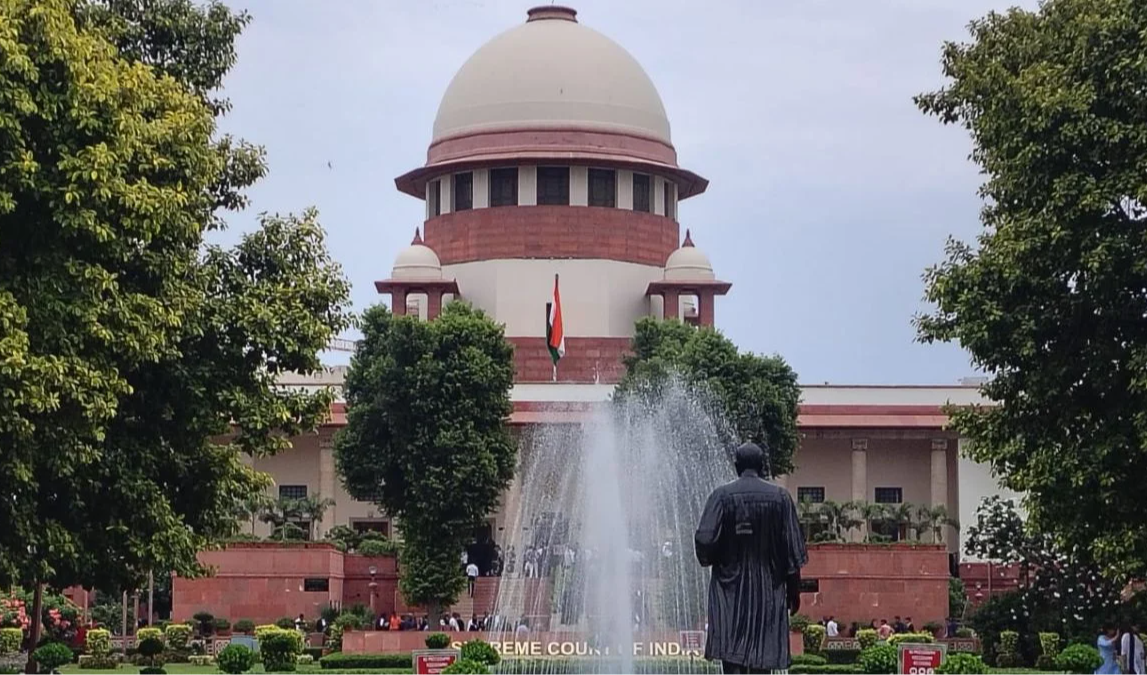
The Supreme Court of India on Wednesday issued notice to the Delhi Police on the bail petitions filed by Umar Khalid and Sharjeel Imam in the 2020 Delhi riots larger conspiracy case registered under the Unlawful Activities (Prevention) Act (UAPA). However, the Court declined to consider their requests for interim bail at this stage, stating that the Delhi Police must first be given an opportunity to respond.
A three-judge Bench comprising Chief Justice of India (CJI) Surya Kant, Justice Joymalya Bagchi and Justice V. Mohana heard the matter on November 25. The proceedings came after the Delhi High Court recently rejected the bail pleas of the two accused, prompting them to approach the Supreme Court.
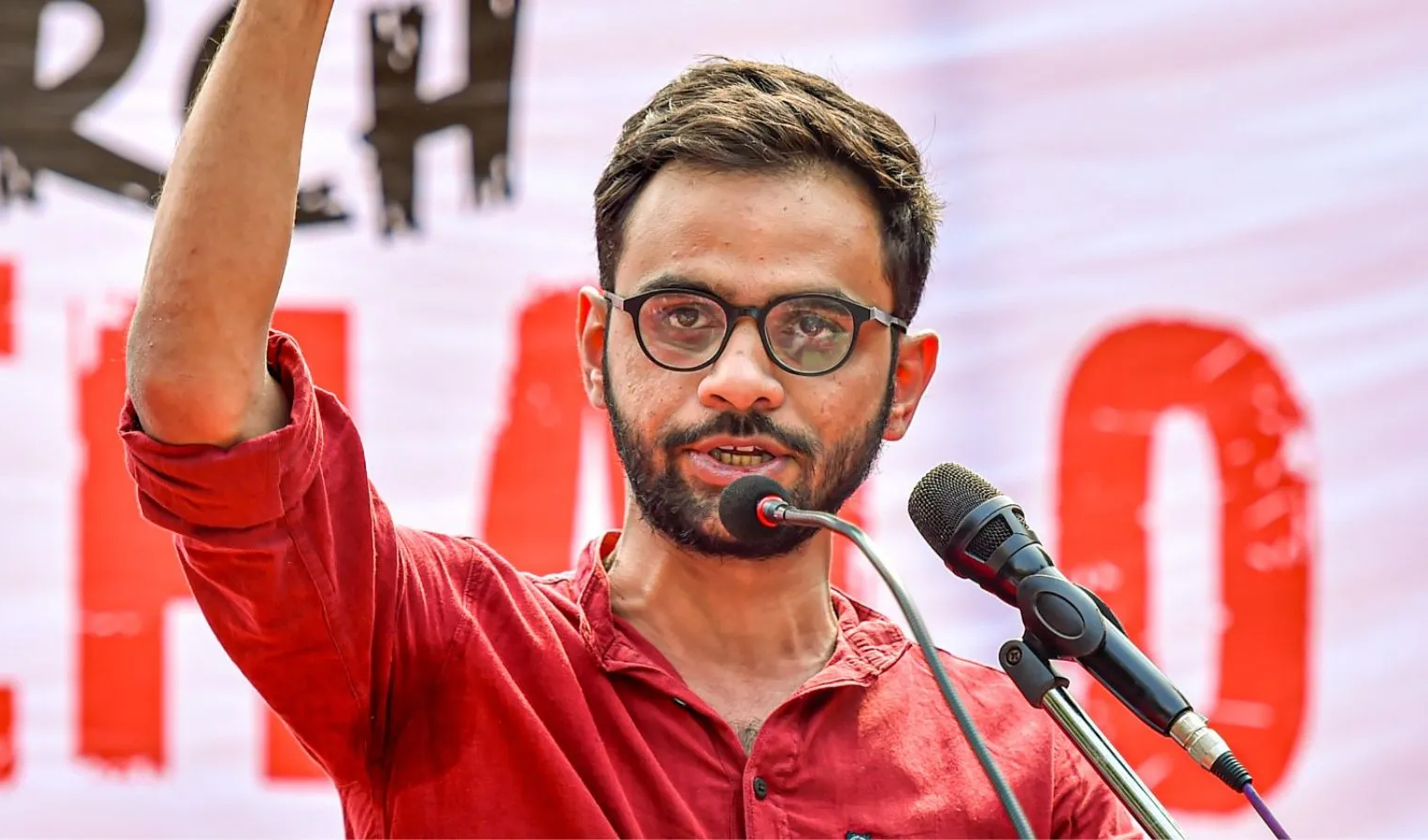
During the hearing, Senior Advocate Kapil Sibal, appearing for Umar Khalid, sought interim bail, highlighting that his client had remained in custody for more than six years. Senior Advocate Siddharth Dave, representing Sharjeel Imam, also pressed for similar interim relief.
The Bench, however, indicated that it would not consider interim relief without first hearing the response of the investigating agency. The judges made it clear that the Delhi Police would be required to respond to the request before the Court examined whether interim bail could be granted.
The Supreme Court also directed that the matters be placed before the Chief Justice of India on the administrative side for the constitution of an appropriate three-judge Bench. This direction is linked to an earlier reference order concerning the interpretation of prolonged incarceration as a ground for granting bail under the stringent provisions of the UAPA.
Supreme Court Refuses to Consider Interim Bail Immediately
At the beginning of the proceedings, Kapil Sibal pressed for interim bail on behalf of Umar Khalid, emphasising the prolonged period of incarceration.
Sibal submitted that Khalid had already spent more than six years in custody and requested the Court to consider granting temporary relief while the main bail proceedings remained pending.
Siddharth Dave similarly sought interim relief for Sharjeel Imam.
The Bench, however, declined to entertain the interim bail requests immediately. The judges indicated that the Delhi Police, as the respondent, must first be given an opportunity to present its position.
When Sibal referred to the possibility of interim relief in light of the circumstances of the case, the Chief Justice responded, "Not today."
Justice Joymalya Bagchi also observed that the petitioners had made a request for interim relief and that the respondent should be allowed to respond before the Court considered it.
The Chief Justice reiterated that the Court would examine the matter after hearing the other side.
The development means that the Supreme Court has issued notice on the bail petitions but has not granted interim bail to either Umar Khalid or Sharjeel Imam.
Three-Judge Bench to Examine Legal Questions Arising From Earlier Reference
Another significant aspect of Wednesday's proceedings was the direction to place the petitions before the Chief Justice of India for the constitution of a three-judge Bench.
The direction arises from a reference order passed on May 22, 2026, by a two-judge Bench in the matter of Tasleem Ahmed.
The reference concerns a perceived conflict between different Supreme Court decisions dealing with the principles governing bail in cases involving prolonged incarceration under the UAPA.
In particular, the legal issue relates to the interpretation of the Supreme Court's judgment in Union of India v. K.A. Najeeb and its application in subsequent bail decisions, including the January 2026 judgment in Gulfisha Fatima.
The K.A. Najeeb judgment, delivered by a three-judge Bench in 2021, recognised that prolonged incarceration and delays in the conclusion of a criminal trial could constitute grounds for granting bail, even in cases involving stringent statutory restrictions under the UAPA.
The reference order seeks consideration of the perceived differences in the interpretation and application of these principles by different Benches.
During Wednesday's hearing, the Chief Justice indicated that the issue required consideration by an appropriately constituted three-judge Bench.
Kapil Sibal Refers to Interim Bail Granted in Tasleem Ahmed Matter
During the proceedings, Kapil Sibal drew the Bench's attention to the earlier Tasleem Ahmed reference order.
He pointed out that while referring the legal questions to a larger Bench, the Supreme Court had also granted interim bail to certain co-accused persons in the Delhi riots larger conspiracy case.
Sibal relied on this development while pressing the Court to consider interim relief for Umar Khalid.
However, the Chief Justice declined to entertain the request immediately.
The Bench maintained that the Delhi Police should first be given an opportunity to respond to the interim bail prayer.
Justice Bagchi also indicated that the interim relief request would be considered after receiving the respondent's response.
The Court's position was that the interim application could not be considered independently of the procedural requirements and the legal questions arising from the pending reference.
CJI Says Perceived Conflict Between Judgments Requires Consideration
Senior Advocate Siddharth Dave argued that the May 22 reference order in Tasleem Ahmed had no bearing on the present bail petitions.
He submitted that Khalid and Imam had approached the Supreme Court in accordance with the liberty granted by an earlier judgment delivered in January 2026.
According to Dave, the January judgment had permitted the two accused to seek bail after the expiry of one year, subject to the conditions specified by the Court.
Solicitor General of India Tushar Mehta, appearing for the Delhi Police, opposed this position and submitted that the reference order had also arisen from the same FIR.
The Chief Justice indicated that the Court needed to carefully examine the legal position because of the differing observations made in previous judgments.
During the exchange, CJI Surya Kant observed that the earlier judgment in K.A. Najeeb was also under discussion in the reference proceedings.
He remarked that he felt somewhat embarrassed because different Benches appeared to have interpreted the principles laid down in the judgment differently.
The Chief Justice stated:
"One bench says Najeeb means this, another bench says it does not mean...I am being told what I have said..."
The observation highlighted the judicial concern surrounding the interpretation of the principles governing bail in cases involving prolonged detention under stringent anti-terror legislation.
The Chief Justice indicated that the perceived conflict required proper judicial consideration before the matter could proceed further.
Petitioners Seek Early Hearing of Bail Applications
Kapil Sibal also requested the Supreme Court to ensure that the petitions were listed at an early date.
Responding to the request, the Chief Justice stated that the Bench was already aware of the relevant facts and circumstances of the matter.
"We have done our homework," the CJI said.
Sibal subsequently asked whether the case could be listed specifically for consideration of the interim bail applications.
The Chief Justice, however, indicated that the main bail proceedings themselves would be listed for hearing.
The Court therefore did not fix a separate immediate hearing on the interim relief request during Wednesday's proceedings.
The next stage will involve the response of the Delhi Police and the administrative process for constituting the appropriate three-judge Bench.
Supreme Court Had Denied Bail to Khalid and Imam in January 2026
The present proceedings originate from the Supreme Court's January 5, 2026, judgment concerning the bail applications of Umar Khalid and Sharjeel Imam.
A Bench comprising Justice Aravind Kumar and Justice N.V. Anjaria had rejected their bail pleas in the 2020 Delhi riots larger conspiracy case.
While denying bail, the Bench described the two accused as "ideological drivers" of the alleged larger conspiracy.
At the same time, the Court granted bail to five other accused persons, including Gulfisha Fatima, distinguishing their alleged roles from those attributed to Khalid and Imam.
The January judgment also imposed a one-year restriction on the consideration of fresh bail applications by Khalid and Imam.
The Court had specified that they could approach it again after the examination of protected witnesses by the prosecution or after the expiry of one year from the date of the judgment, whichever occurred earlier.
The present petitions have been filed in the context of that condition.
The petitioners have argued that the one-year period is approaching its conclusion and that the prosecution is unlikely to complete the examination of protected witnesses by January 5, 2027.
They have also relied on their prolonged incarceration and the continuing progress of the trial while seeking bail.
Their submissions raise questions about the balance between statutory restrictions under the UAPA, the right to personal liberty and the constitutional importance of ensuring that criminal trials are conducted without unreasonable delay.
Background: K.A. Najeeb Judgment and Subsequent Judicial Observations
The legal debate surrounding the bail petitions is connected to the Supreme Court's 2021 judgment in Union of India v. K.A. Najeeb.
In that case, a three-judge Bench held that prolonged incarceration and delays in trial proceedings could justify the grant of bail, notwithstanding the stringent conditions imposed under the UAPA.
The judgment recognised that statutory restrictions on bail cannot completely override the constitutional requirement of protecting personal liberty, particularly where an accused person remains incarcerated for an extended period without a realistic prospect of an early conclusion of the trial.
Subsequent Supreme Court decisions have considered the application of these principles in different factual circumstances.
One of the significant developments occurred in Syed Ifthikar Andrabi, where a two-judge Bench comprising Justice B.V. Nagarathna and Justice Ujjal Bhuyan criticised aspects of the January 2026 judgment in Gulfisha Fatima concerning the denial of bail to Umar Khalid and Sharjeel Imam.
The Bench expressed concerns that the approach adopted in Gulfisha Fatima and Gurwinder Singh appeared to depart from the principles laid down in K.A. Najeeb.
These observations contributed to the subsequent reference order in Tasleem Ahmed, which identified a perceived conflict requiring consideration by a larger Bench.
What Happens Next in the Umar Khalid and Sharjeel Imam Bail Case?
The Supreme Court's November 25 proceedings have left the central question of bail unresolved.
The Court has issued notice to the Delhi Police but has declined to grant interim relief or consider the request immediately.
The Chief Justice will also have to consider the administrative process for constituting an appropriate three-judge Bench in view of the earlier reference.
The legal questions surrounding prolonged incarceration, the application of the UAPA's bail restrictions and the interpretation of the K.A. Najeeb judgment may therefore assume significance in the subsequent proceedings.
For Umar Khalid and Sharjeel Imam, the immediate development does not result in release from custody. Their bail petitions remain pending, and the Supreme Court has indicated that the interim relief request will be considered after the respondent is heard.
The proceedings are also significant for the broader legal debate concerning the relationship between stringent anti-terror legislation, constitutional protections and the right to a timely criminal trial.
No final determination on the merits of the present bail petitions was made by the Supreme Court on Wednesday.