Yugcharan News / 24-11-2026
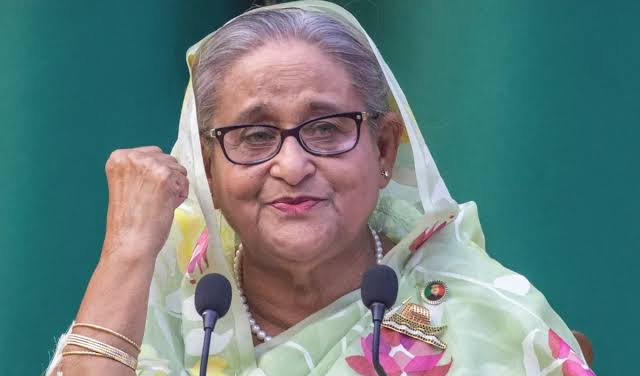
Former Bangladesh Prime Minister Sheikh Hasina has announced her intention to return to Bangladesh on December 16, more than two years after she was forced to leave office following a mass uprising against her government in August 2024. Living in exile in New Delhi since her departure, Hasina has reportedly asked the Bangladeshi government to arrange air transportation from India to Dhaka, according to a statement issued by her spokesperson.
Her proposed return has triggered a sharp response from Bangladesh's government, with State Minister for Foreign Affairs Humayun Kabir making it clear that she would not be allowed to return as an ordinary passenger. Speaking at a press briefing on Tuesday, Kabir said Hasina would be brought back to the country in handcuffs, referring to the death sentence imposed on her in absentia by a Bangladeshi court last year.
The announcement comes at a politically sensitive time for Bangladesh, where tensions surrounding Hasina's political future, the activities of her Awami League party and relations with neighbouring India continue to influence the country's political environment.
Sheikh Hasina Requests Government Assistance for Return
Hasina's spokesperson, Syed Mozammel Ali, announced on Tuesday that the former prime minister wanted the Bangladeshi government to arrange her return from New Delhi.
According to the spokesperson's statement, Hasina was taken to India aboard a Bangladeshi aircraft on August 5, 2024, when she left the country amid escalating protests and the collapse of her government. The statement argued that the circumstances surrounding her departure violated Bangladesh's Constitution and called upon the present authorities to facilitate her return.
"Since Sheikh Hasina was flown to India on a Bangladesh aircraft on 5 August 2024, she now calls upon the government to arrange for her air transport from Delhi back to Dhaka," Ali said.
However, the proposed return remains uncertain because of the criminal proceedings against her and the Bangladeshi government's stated position on her possible arrival.
Hasina's announcement has also raised questions about whether she would be able to travel to Bangladesh without facing immediate arrest.
Bangladesh Government Rules Out Unrestricted Return
Bangladesh's State Minister for Foreign Affairs Humayun Kabir rejected the possibility of Hasina returning without facing legal consequences.
Speaking to journalists on Tuesday, Kabir said that she would not be permitted to enter the country as an ordinary commercial passenger. He stated that she would instead be brought back in handcuffs.
His remarks reflect the current government's position that Hasina must face the legal proceedings and consequences arising from the cases against her.
Kabir also accused Hasina and the Indian government of contributing to instability in Bangladesh. He alleged that they were supporting activities that he described as terrorism inside the country.
These allegations have added another dimension to the already complicated relationship between Dhaka and New Delhi.
India's Ministry of External Affairs had not immediately responded to the latest comments at the time of the report. However, in April, the Indian government said it was examining Bangladesh's request for Hasina's extradition.
India had also expressed its intention to engage constructively with Bangladesh's new government and work towards strengthening bilateral relations.
Death Sentence in Absentia Complicates Return
One of the biggest obstacles to Hasina's proposed return is the death sentence imposed on her by a Bangladeshi court last year.
The former prime minister was convicted in absentia in a case involving crimes against humanity linked to the deadly government crackdown on student-led protests in 2024.
The demonstrations initially began over the quota system in government employment. However, the movement expanded into a nationwide uprising against Hasina's administration after security forces launched a crackdown on protesters.
The United Nations estimated that as many as 1,400 people were killed during the unrest.
Hasina, who governed Bangladesh for 15 years, has denied the charges against her.
Her departure on August 5, 2024, marked a turning point in Bangladesh's political history. As protesters gathered in Dhaka and crowds moved towards her official residence, she left the country and subsequently took refuge in India.
The political transition that followed resulted in the formation of an interim administration led by Nobel Peace Prize laureate Muhammad Yunus.
The legal proceedings against Hasina have remained a major source of political tension, particularly among supporters of the Awami League, who continue to demand her return.
December 16: A Symbolic Date for Hasina's Return
Hasina's decision to identify December 16 as her proposed return date carries considerable historical significance for Bangladesh.
The country celebrates Victory Day on December 16 every year to commemorate the end of the 1971 Liberation War against Pakistan. The date marks the victory of Bangladeshi forces and the emergence of independent Bangladesh.
Hasina's father, Sheikh Mujibur Rahman, played a central role in the country's independence movement and became Bangladesh's founding leader.
Her aide, Abu Obaidha Arin, described the decision to choose December 16 as deeply symbolic.
He expressed confidence that Hasina would be able to celebrate the historic occasion among her supporters and people in Bangladesh. He also indicated that her political ambitions remained intact despite her prolonged absence from the country.
The choice of Victory Day appears intended to connect her proposed return with the country's historical and political legacy.
However, whether she can actually enter Bangladesh on that date remains unclear, particularly given the government's strong response and the legal proceedings against her.
Awami League Continues Political Activities Despite Ban
Hasina's announcement comes amid continued political activity by supporters of the Awami League, the party she led during her 15 years in power.
The interim administration headed by Muhammad Yunus banned the party from political activities in May 2025.
The restrictions were followed by a decision preventing the Awami League from participating in the February 2026 general election.
Despite the ban, the party's supporters have continued to organise protests and demonstrations in different parts of the country. Some demonstrations have included demands for Hasina's return and calls for nationwide shutdowns.
The latest political developments indicate that the former ruling party continues to have an active support base, although its formal participation in the country's electoral process remains restricted.
The February election brought the Bangladesh Nationalist Party (BNP), the Awami League's long-time political rival, to power. Tarique Rahman became prime minister following the election.
The change in government has significantly altered Bangladesh's political landscape, with the BNP now leading the administration after years of Awami League rule.
Hasina's statement about returning to Bangladesh could further intensify the political debate surrounding the former ruling party and its future.
Hasina Previously Acknowledged Risks of Returning
Although Hasina has repeatedly expressed her desire to return to Bangladesh, she has also acknowledged that doing so could expose her to serious risks.
In August, speaking through an audio link at a gathering of journalists in New Delhi marking the second anniversary of her departure, she discussed the possibility of imprisonment or even death if she returned.
"I know that they may put me in jail or they may kill me, anything may happen, but still I have to go back," she said.
Her latest announcement suggests that her intention to return remains unchanged despite the legal and political challenges.
However, the conditions surrounding her return are significantly different from those that existed before her government collapsed.
The former prime minister now faces a government that has publicly rejected the possibility of an unrestricted return, while the death sentence imposed in absentia creates an additional legal obstacle.
Hasina's Presence in India Strains Bilateral Relations
Hasina's continued stay and political activities in India have also complicated New Delhi's efforts to rebuild relations with Bangladesh.
India maintained close diplomatic and political relations with Hasina during her tenure. Her departure from power in August 2024 created uncertainty in bilateral ties, particularly as the new political leadership in Dhaka adopted a different approach towards its relationship with New Delhi.
India had hoped that the formation of an elected government would create an opportunity to restore relations.
However, Prime Minister Tarique Rahman has not visited India since assuming office, despite receiving an invitation. He has travelled to China, Japan and Malaysia, while also skipping the BRICS summit hosted by India in September.
Discussions regarding a possible visit to India in August coincided with criticism in Bangladesh over Hasina's remarks to journalists in New Delhi.
Although the two countries have subsequently resumed discussions about a possible visit, no official dates have been announced.
Hasina's continued political presence in India has therefore remained a sensitive issue in diplomatic engagement between the neighbouring countries.
Extradition Issue Could Become a Major Diplomatic Challenge
Bangladesh's request for Hasina's extradition remains another important factor in the evolving situation.
In April, India's Ministry of External Affairs confirmed that it was examining the request from Bangladesh. The ministry also indicated that India wanted to maintain constructive engagement with the new administration.
However, the latest developments suggest that the extradition question could become more complicated if Hasina continues to publicly press for her return.
Dhaka's position, as expressed by Kabir, indicates that the Bangladeshi government expects her to face legal consequences rather than return without restrictions.
For India, the situation involves both its diplomatic relationship with Bangladesh and the extradition request concerning a former head of government who has been living on Indian soil since August 2024.
The two governments will have to navigate these issues carefully as they attempt to prevent further deterioration in bilateral relations.
Political Uncertainty Surrounds December 16 Announcement
Hasina's declaration has brought renewed attention to her political future and the continuing divisions within Bangladesh.
While her supporters have welcomed the proposed return date and described it as an important moment, the government in Dhaka has made its position clear regarding the legal action awaiting her.
The situation also raises questions about the future of the Awami League, its ability to participate in Bangladesh's political process and the possibility of renewed demonstrations surrounding Hasina's return.
For now, December 16 remains the date announced by the former prime minister rather than a confirmed date of arrival.
Her return will depend on several unresolved issues, including the legal proceedings against her, Bangladesh's position on her entry, the extradition request and India's response.
With Victory Day approaching, Hasina's announcement has placed her political future back at the centre of Bangladesh's domestic politics and its diplomatic relationship with India.