Yugcharan News / 25-11-2026
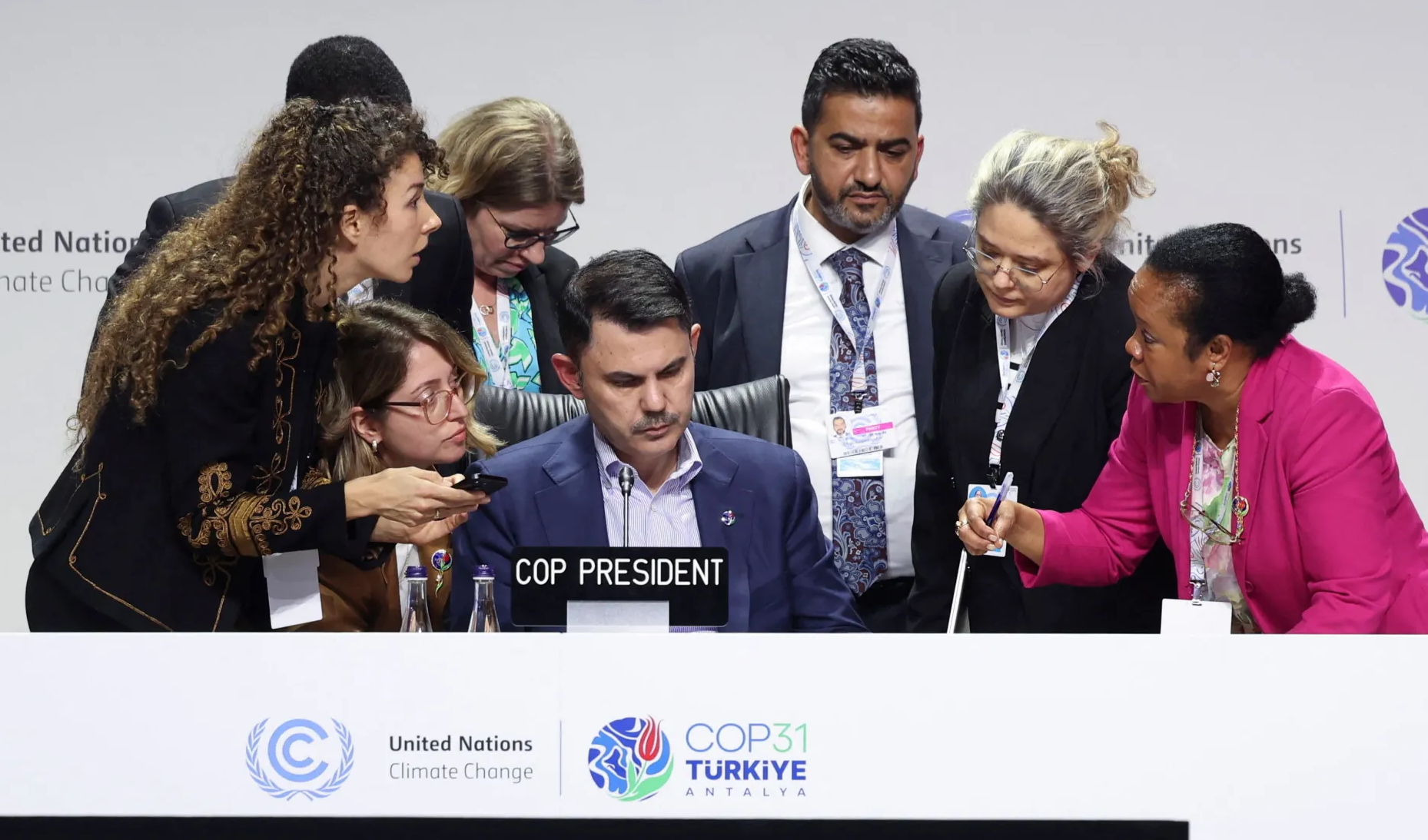
The 31st United Nations Climate Change Conference (COP31), held in Antalya, Turkey, has ended without a final agreement after countries failed to reach a consensus over how to address fossil fuels, exposing deep divisions between major energy-producing nations and countries demanding stronger climate action. The breakdown in negotiations marks the first time in more than two decades that a UN climate summit has concluded without a collective agreement, raising fresh concerns about the international community's ability to tackle global warming.
The two-week conference initially appeared to be progressing smoothly, with participating countries adopting the agenda within hours of the opening session. However, disagreements intensified during the second week, particularly over whether the final agreement should explicitly mention fossil fuels and establish a clearer pathway towards reducing dependence on coal, oil and natural gas.
The draft agreement, which would have been known as the Antalya Accords if adopted, acknowledged that the international community had failed to keep global temperature increases within the 1.5-degree Celsius limit set under the Paris Agreement. It also referred to the possibility of entering a period of temperature overshoot, in which global warming temporarily exceeds the internationally agreed threshold.
However, the negotiations eventually collapsed after countries disagreed over the treatment of fossil fuels in the proposed text. Oil, gas and coal-producing nations, reportedly led by Saudi Arabia, opposed including an explicit reference to fossil fuels, while the European Union, Panama and several climate-vulnerable island nations refused to support an agreement that did not address the principal sources of greenhouse gas emissions.
The failure to reach consensus has raised questions about the effectiveness of the annual climate negotiations, particularly as countries already experiencing severe climate impacts continue to demand stronger commitments from major emitters and financial support for adaptation.
Fossil Fuel Disagreement Becomes the Main Obstacle
The central disagreement at COP31 concerned whether the final agreement should include a direct commitment to moving away from fossil fuels.
Fossil fuels, including coal, petroleum and natural gas, remain major sources of greenhouse gas emissions responsible for driving climate change. Their combustion releases carbon dioxide and other pollutants into the atmosphere, contributing to rising global temperatures and increasingly severe climate-related risks.
According to the assessment presented by climate experts at the conference, the draft agreement submitted for approval did not contain any explicit reference to fossil fuels. This omission followed pressure from countries with significant oil, gas and coal production interests.
The absence of such language became unacceptable to several participating countries, particularly those seeking a stronger international commitment to reducing dependence on conventional energy sources.
The European Union, Panama and a number of vulnerable island nations opposed accepting an agreement that failed to directly address fossil fuels. Their position reflected concerns that climate commitments would remain incomplete without a clear strategy for reducing emissions from the energy sector.
The disagreement eventually prevented countries from reaching the consensus required to adopt the final document.
The situation also highlighted a recurring difficulty in international climate negotiations. Draft agreements often begin with relatively ambitious language but become weaker as countries negotiate over specific commitments, responsibilities and implementation requirements.
A similar situation occurred at COP30 in Brazil, where the final text was criticised for not explicitly mentioning fossil fuels. Countries had accepted a diluted agreement to preserve consensus, but the same compromise proved difficult to achieve at COP31.
Panama Raises Concerns Over the Pace of Climate Negotiations
Frustration among countries demanding stronger climate commitments became increasingly visible during the second week of the conference.
On November 19, Panamanian Environment Minister Juan Carlos Navarro criticised the slow pace of negotiations and questioned the effectiveness of prolonged diplomatic discussions while environmental damage continued.
Navarro said, "While we listen to endless oratory, the planet is being destroyed."
The statement reflected growing dissatisfaction among delegations that wanted the conference to deliver concrete commitments rather than another document containing general climate objectives.
Panama's delegation subsequently indicated that it would not support an outcome that failed to adequately address the climate crisis.
The disagreement demonstrated the widening gap between countries seeking stronger emissions reductions and those reluctant to accept language that could affect their fossil fuel-dependent economies.
For climate-vulnerable countries, the issue was not limited to the wording of an international agreement. They argued that delays in reducing emissions could increase the risks of rising sea levels, extreme weather events, flooding and other climate-related disasters.
Electrification Emerges as a Positive Development
Despite the failure to secure a final agreement, COP31 witnessed progress in discussions surrounding electrification and the expansion of cleaner energy systems.
Electrification was one of the major priorities of this year's conference. The concept involves replacing activities traditionally dependent on fossil fuels with electricity-powered alternatives across sectors such as transport, manufacturing and industry.
The conference hosts promoted an ambitious target known as 35x35, which aims to increase electricity's share of global final energy consumption to 35 per cent by 2035.
The objective is to encourage greater use of electricity in sectors that currently rely heavily on petrol, diesel, coal and natural gas.
During the final days of the summit, participating countries and organisations launched an electrification delivery package under the COP31 Action Agenda.
The initiative received support from more than 150 countries, alongside the European Union, 37 cities and approximately 150 businesses.
The package included plans for electricity utilities and energy companies to invest US$156 billion annually in renewable energy and energy storage.
Such investments could support the expansion of clean electricity infrastructure, improve energy storage capacity and help countries transition towards lower-emission energy systems.
However, climate experts highlighted an important limitation: electrification alone cannot guarantee a reduction in greenhouse gas emissions if the electricity used continues to be generated through coal, oil and natural gas.
For electrification to deliver its full climate benefits, countries must simultaneously increase renewable electricity generation and reduce dependence on fossil fuel-based power production.
This was one of the reasons why several countries wanted the final COP31 agreement to contain a clearer commitment to transitioning away from fossil fuels.
With negotiations ending without consensus, the electrification initiative remained a separate area of cooperation rather than becoming part of a comprehensive collective agreement on fossil fuel reduction.
Pacific Island Nations Express Disappointment
The failure of COP31 to produce a final agreement was particularly disappointing for Pacific island nations and other countries highly vulnerable to climate change.
Several Pacific island states consist of low-lying coral atolls that face serious threats from rising sea levels, coastal erosion, flooding and increasingly severe storms.
For these countries, climate change represents a direct challenge to the long-term safety of communities, infrastructure and national territories.
Many island nations have contributed relatively little to historical global greenhouse gas emissions but are among those facing some of the most serious consequences of rising temperatures.
The failure to agree on stronger action concerning fossil fuels and adequate adaptation finance highlighted the continuing gap between the needs of vulnerable countries and the commitments being delivered through international climate negotiations.
Tuvalu's Climate Minister Maina Vakafua Talia expressed visible disappointment following the collapse of the negotiations. Tuvalu is particularly vulnerable because of its low elevation, with its highest point standing approximately 4.6 metres above sea level.
The outcome reinforced concerns that countries with limited financial and technical resources may struggle to protect their populations from increasingly severe climate impacts.
Marshall Islands Questions Global Spending Priorities
The Marshall Islands also expressed strong dissatisfaction with the outcome of the conference.
Ambassador Albon Ishoda criticised the international community's inability to provide adequate resources for climate protection while substantial financial resources continue to be allocated to military expenditure.
Ishoda said, "Disappointing is probably not strong enough a word … We have money for wars but not to save communities."
His remarks highlighted the financial challenges faced by vulnerable island nations that require assistance to strengthen coastal protection, improve infrastructure, prepare for extreme weather events and support communities affected by climate change.
Climate adaptation financing has remained a major issue in international negotiations because developing countries often lack the resources needed to respond effectively to climate-related disasters.
For countries such as the Marshall Islands, rising sea levels and extreme weather are not distant environmental concerns but immediate threats requiring long-term planning and substantial investment.
The inability of COP31 participants to agree on stronger adaptation measures and financing arrangements has therefore intensified concerns about the effectiveness of global climate cooperation.
Temperature Overshoot Raises Further Climate Concerns
Another significant issue discussed during COP31 was the acknowledgement that the world has failed to remain on a pathway consistent with limiting global warming to 1.5 degrees Celsius.
The draft Antalya Accords recognised the possibility of a period of temperature overshoot, meaning global temperatures could temporarily rise beyond the 1.5-degree threshold.
The 1.5-degree objective is a central component of the Paris Agreement, which seeks to limit global temperature increases and strengthen international efforts to address climate change.
Exceeding this threshold could increase the risks associated with extreme heat, changing rainfall patterns, rising sea levels and damage to ecosystems.
The concept of overshoot also raises questions about whether future reductions in greenhouse gas emissions and carbon removal measures could bring temperatures back below the threshold.
However, the draft agreement's acknowledgement of this challenge did not translate into a final collective commitment because negotiations collapsed over the wording concerning fossil fuels.
The failure to agree on a clear pathway for reducing fossil fuel dependence has consequently raised further concerns about the gap between scientific warnings and international political action.
Why COP31's Failure Matters for Global Climate Policy
The collapse of negotiations at COP31 represents a setback for international climate diplomacy because annual UN climate conferences are intended to provide a platform for countries to coordinate their responses to global warming.
The consensus-based negotiation process requires countries with different economic interests, energy requirements and development priorities to agree on common language and commitments.
However, the growing differences between fossil fuel-producing countries and climate-vulnerable nations have made reaching agreement increasingly difficult.
For major energy producers, the transition away from fossil fuels involves significant economic and industrial considerations. For vulnerable island states and developing countries, delays in climate action can increase the risks to lives, livelihoods and national infrastructure.
The outcome of COP31 has exposed this divide more clearly.
Although the electrification delivery package demonstrated that cooperation remains possible in specific areas, the absence of a final agreement means countries did not secure a new collective commitment addressing fossil fuel dependence.
The conference has therefore ended with progress in selected initiatives but without the comprehensive political agreement that many participants had hoped to achieve.
As global temperatures continue to rise and vulnerable communities face growing environmental risks, the failure to reach consensus at Antalya places renewed pressure on governments to translate climate commitments into practical measures.
For the countries most exposed to climate change, the outcome represents another reminder that international negotiations have yet to bridge the gap between the urgency of the climate crisis and the pace of global political decision-making.