Yugcharan News / 24-11-2026
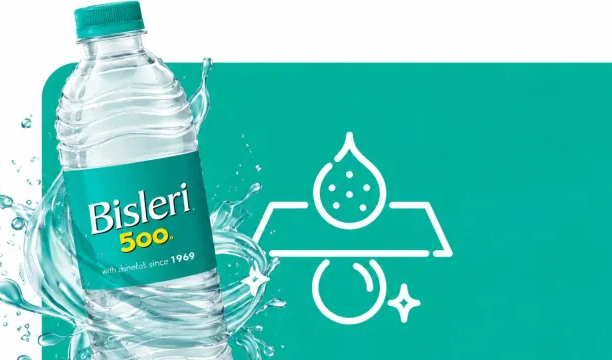
India's food safety regulator, the Food Safety and Standards Authority of India (FSSAI), has found a sample of packaged drinking water produced by Bisleri International to be unsafe, raising fresh concerns about the quality and safety standards followed by bottled water manufacturers across the country. Following the findings, the regulator is planning wider inspections and laboratory testing of products from Bisleri as well as other packaged drinking water companies, according to government sources.
The development is a significant setback for Bisleri, one of India's largest and most recognisable bottled water brands, which has maintained a strong presence in the country's packaged drinking water market for decades. The regulatory action follows laboratory findings that initially detected bromate levels above the prescribed limit in a sample collected from the company's premises. After Bisleri challenged the initial assessment, the regulator continued to classify the sample as unsafe, citing the detection of another group of chemicals known as polynuclear aromatic hydrocarbons (PAHs).
The FSSAI has also indicated that it will initiate legal proceedings against the company. Meanwhile, Bisleri has defended its quality standards, maintaining that its products are safe for consumption and that it follows stringent quality-control procedures.
The latest development comes as Indian food safety authorities increase scrutiny of major food and beverage companies, with regulatory inspections and enforcement actions being undertaken across several sectors.
FSSAI Plans Nationwide Testing of Packaged Drinking Water
Following the laboratory findings, the FSSAI is preparing to expand its inspection programme to cover more Bisleri samples collected from different parts of India.
According to a government source cited in the report, the regulator also intends to examine packaged drinking water products manufactured by other companies operating in the country.
The proposed testing programme is expected to assess whether similar quality-related concerns exist elsewhere in the bottled water industry.
The FSSAI's decision comes at a time when packaged drinking water has become an essential consumer product in many Indian cities and towns. Concerns about the quality of tap water, inconsistent municipal supplies and the availability of safe drinking water have contributed to the growing dependence on bottled water.
The regulator's latest action could therefore have wider implications for manufacturers, distributors, retailers and consumers.
The FSSAI has also said it would initiate legal proceedings against Bisleri in connection with the findings.
However, the precise scope of the proposed nationwide testing exercise, including the number of companies and samples involved, has not yet been specified.
Bromate Levels Found Above Permitted Limit
According to the FSSAI, the sample initially found unsafe did not comply with the prescribed limits for bromate.
The sample was collected from Bisleri's premises, and the regulator stated that laboratory testing identified bromate levels exceeding the permissible standard.
Bromate is a chemical compound that can be formed as a by-product of certain water disinfection processes. Its presence in drinking water is subject to regulatory limits because excessive exposure can raise public health concerns.
Bisleri subsequently challenged the initial findings and sought a review of the laboratory assessment.
However, the regulator maintained its position that the sample was unsafe. Following the appeal, the FSSAI cited the detection of polynuclear aromatic hydrocarbons, commonly known as PAHs, as an additional concern.
These findings have brought renewed attention to the importance of monitoring chemical contaminants in packaged drinking water.
PAHs Raise Additional Public Health Concerns
Polynuclear aromatic hydrocarbons are a group of chemical compounds that can be generated through processes such as incomplete combustion of organic materials. Certain compounds within this group are associated with significant health risks.
Research published through the National Library of Medicine's PubMed database has highlighted concerns about the toxic, mutagenic and carcinogenic properties of PAHs.
Mutagenic substances can cause changes in genetic material, while carcinogenic substances are associated with the potential development of cancer.
The presence of such compounds in drinking water is therefore a matter of public health concern, particularly when exposure occurs repeatedly.
The FSSAI's reference to PAHs in its reassessment of the Bisleri sample has raised questions about the possible sources of contamination and the quality-control procedures applied during production.
However, the available findings do not establish that all Bisleri products contain these chemicals or that consumers of the brand have experienced health problems.
The regulatory finding relates to a particular sample, and further testing will be important in determining whether the issue extends to other batches or production facilities.
Bisleri Says Its Products Are Safe for Consumption
Bisleri International has responded to the regulatory development by defending its manufacturing and quality-control practices.
In a statement, the company said that drinking water safety remained a priority and that it maintained stringent quality controls across its operations.
The company also maintained that its water products were safe for consumption and said it would cooperate with the regulatory authorities.
Bisleri further provided details about the initial sample collected from its Goa facility in 2025.
According to the company, the sample showed bromate levels of 12 micrograms per litre, compared with the prescribed maximum limit of 10 micrograms per litre.
This represented a reading two micrograms per litre above the regulatory limit.
However, Bisleri said that additional independent testing arranged by the company found the chemical within the prescribed limits.
The difference between the company's independent testing results and the regulator's findings has become an important aspect of the dispute.
The company has maintained its position on product safety, while the FSSAI has retained its assessment that the sample did not meet the required standards.
The matter is expected to be examined further through regulatory proceedings and additional testing.
Controversy Dates Back to September 2025
The regulatory scrutiny involving Bisleri reportedly dates back to September 2025, according to the company.
A second government source said that the batches associated with the unsafe sample had been recalled and that subsequent testing of products did not identify further water-quality problems.
However, correspondence between Bisleri and the FSSAI has also drawn attention to the question of whether the affected products were still available in the market.
A letter sent by the company to the regulator in February, which was reviewed by Reuters, indicated that no products from the relevant batch remained in the market by that time.
The company's communication suggested that the products had already been sold or consumed, leaving no stock available for a recall.
This has raised questions about the timeline of the regulatory response and the availability of affected batches after the initial findings.
The government source's statement regarding the recall and subsequent testing represents the authorities' account of the action taken in relation to the affected products.
Bisleri's February communication, meanwhile, provides additional context regarding the availability of the relevant stock.
Bisleri's Dominant Position in India's Bottled Water Market
The controversy has attracted considerable attention because of Bisleri's position in India's packaged drinking water industry.
The brand is among the country's most widely recognised bottled water names, with its products available across retail outlets, restaurants, offices and other commercial establishments.
Its small 20-rupee bottles have become familiar to consumers, while larger water cans are commonly used in offices and households equipped with water dispensers.
Bisleri competes with several major companies in India's packaged drinking water market, including PepsiCo, Coca-Cola, Tata and Reliance Consumer, associated with billionaire businessman Mukesh Ambani.
Industry estimates cited in the report place the value of India's packaged drinking water sector at more than $3.5 billion.
The market has expanded as consumers increasingly depend on packaged water for drinking and everyday requirements.
Bisleri has maintained its position through an extensive distribution network and large-scale manufacturing operations.
According to information provided by the company, it operates 130 manufacturing plants across the country, supported by approximately 5,980 distributors and a fleet of 8,270 transport vehicles.
The company also sells hundreds of millions of bottles and cans annually, according to an industry source cited in the report.
The scale of these operations makes the regulatory findings particularly significant for the wider industry.
Bisleri Reports Annual Sales of $345 Million
Bisleri's financial position also highlights the commercial importance of the company within India's consumer goods sector.
The company reported annual sales of approximately $345 million for the financial year ending March 2025.
It has also been expanding its international presence, including entering the United Arab Emirates market in 2025.
The company identified the UAE as a market offering significant growth opportunities, particularly because of its large Indian diaspora and familiarity with Indian consumer brands.
In recent years, Bisleri and other bottled water manufacturers have also expanded into premium water categories.
These include natural mineral water, still water and sparkling water products aimed at consumers willing to pay higher prices for differentiated offerings.
The premium segment has attracted attention as companies seek to benefit from changing consumption habits and increasing demand for specialised beverages.
However, the latest regulatory development could place additional pressure on the sector to demonstrate consistent quality standards across different product categories.
Consumer Concerns Grow Following Regulatory Findings
The FSSAI's findings have triggered discussions among consumers on social media platforms, with the Bisleri brand becoming a trending topic on X in India.
Several users expressed concern over the possibility that bottled water products they had regularly consumed might not meet required safety standards.
A local news agency also featured a shopkeeper who said he had stopped selling Bisleri products following the reports.
Consumers expressed particular concern because packaged drinking water is often purchased as a safer alternative to untreated or unreliable local water supplies.
For many households, offices and restaurants, bottled water is not simply a premium product but an everyday necessity.
The controversy has therefore raised broader questions about how consumers can assess the safety and quality of packaged drinking water.
At the same time, it is important to distinguish between the findings concerning the specific sample and the safety of all products sold under the brand.
The available regulatory information does not establish that every Bisleri bottle or batch is unsafe.
Further testing and official findings will be necessary to determine the extent of the issue.
FSSAI Intensifies Enforcement Against Food and Beverage Companies
The action involving Bisleri comes amid a broader enforcement drive by Indian food safety authorities.
The FSSAI and state-level regulatory agencies have increased inspections of food and beverage businesses, examining issues such as product quality, manufacturing standards and compliance with labelling requirements.
Recent enforcement activities have affected several major companies and businesses, including restaurants such as Domino's and liquor companies such as Diageo.
The regulatory focus has extended beyond individual products to include compliance across manufacturing, packaging, distribution and marketing operations.
The latest decision to widen bottled water testing indicates that packaged drinking water manufacturers could face closer scrutiny in the coming period.
For companies operating in the sector, compliance with prescribed chemical and microbiological standards will remain essential.
What the Development Means for Bottled Water Consumers
The Bisleri case has highlighted the importance of independent laboratory testing and effective regulatory oversight in India's packaged drinking water industry.
Consumers generally purchase bottled water with the expectation that it meets established safety standards. Regulatory findings involving chemical contaminants can therefore affect public confidence, particularly when they concern a widely used brand.
However, a finding involving one sample should not automatically be interpreted as proof that every product from the manufacturer is unsafe.
The distinction between individual samples, affected batches and products currently available in the market remains important.
The FSSAI's proposed nationwide testing exercise could provide a clearer picture of quality standards across the industry.
Its findings may also help identify whether the concerns are limited to a particular manufacturer or indicate wider compliance issues.
Nationwide Testing Could Shape the Future of India's Packaged Water Industry
The regulatory action against Bisleri marks an important development for India's packaged drinking water sector.
The company's response and the regulator's findings will remain central to the proceedings, while the proposed expansion of testing to other brands could bring greater transparency to the market.
The FSSAI is expected to examine additional samples and pursue legal proceedings in connection with the disputed findings.
For Bisleri, the immediate challenge will be to address regulatory concerns, cooperate with the investigation and maintain consumer confidence in its products.
For the wider industry, the development serves as a reminder that brand recognition and market leadership cannot replace strict compliance with food safety standards.
As authorities prepare to widen inspections, the quality and safety of packaged drinking water are likely to remain under close public and regulatory scrutiny across India.