Yugcharan News / 24-11-2026
The Delhi Waqf Board has urged the Delhi High Court to examine whether the historic Qadeemi Masjid, located within the Krishi Bhawan premises in New Delhi, can be retained as part of the Central Vista Redevelopment Project. The Board has argued that the mosque's removal should not be treated as inevitable and that authorities must consider practical alternatives to preserve the existing religious structure while allowing the government redevelopment project to proceed.
In its response before the High Court on Monday, November 23, the Waqf Board acknowledged the public importance of the Central Vista Redevelopment Project but maintained that the preservation of the mosque and the religious requirements of its worshippers should also receive due consideration.
The Board submitted that the feasibility of retaining the existing mosque within the proposed redevelopment layout should be assessed through approved architectural plans and relevant technical material. It emphasised that development requirements and the religious interests of worshippers must be addressed through a lawful and balanced approach.
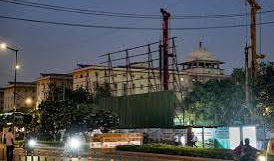
The dispute concerns Qadeemi Masjid, also known as Masjid Krishi Bhawan, a notified Waqf property situated within the government premises. The mosque is more than a century old, with the Waqf Board describing it as a structure with a history of over 149 years. It faces the possibility of demolition because of the proposed construction and redevelopment of government buildings under the Central Vista project.
Waqf Board Seeks Alternatives to Demolition
In its submission before the High Court, the Delhi Waqf Board said its primary objective was to secure consideration of the mosque's preservation and continued use.
The Board maintained that the proposed redevelopment should not automatically result in the removal of the religious structure without examining whether it could be accommodated within the approved layout.
It argued that feasible alternatives should be explored to protect the existing mosque and maintain its religious function.
According to the Board, its position was not intended to obstruct a public infrastructure project but to ensure that the redevelopment process respected the documented religious character and notified Waqf status of the property.
The Board also questioned whether the proposed removal of the mosque could be considered at this stage without first addressing several connected legal issues.
These include the relevance of historical records, the mosque's notified Waqf status and the legal protections applicable to the property.
It submitted that the question of demolition was premature until these issues had been properly examined and adjudicated.
The Waqf Board further argued that the construction of the Common Central Secretariat buildings could not, by itself, justify disregarding the mosque's religious character and legal status.
Places of Worship Act Invoked in Legal Arguments
The Waqf Board also referred to the Places of Worship (Special Provisions) Act, 1991, in support of its position.
The Board argued that the statutory protection associated with the religious character of the mosque could not be bypassed simply by describing the proposed removal as an administrative decision or part of a redevelopment exercise.
It maintained that the historical and religious significance of the structure required appropriate protection.
In its response, the Board stated that conservation measures could also be considered in consultation with the competent heritage authorities wherever necessary.
The submission highlighted the mosque's notified Waqf status, its longstanding religious use and its historical importance as factors that should be considered before any decision affecting the property is taken.
The Board's position is that the redevelopment process should examine whether the mosque can remain within the government complex without compromising the essential requirements of the proposed public infrastructure project.
Caretaking Committee Challenges Proposed Removal
The Waqf Board's submissions came in response to a petition filed by the caretaking committee of Qadeemi Masjid, also referred to as Masjid Krishi Bhawan.
The committee has approached the Delhi High Court seeking directions to prevent government authorities from demolishing, dismantling, removing or otherwise disturbing the mosque without first conducting a fair and transparent examination of the possibility of retaining it.
The petition seeks a reasoned assessment of the mosque's continued existence within the Krishi Bhawan compound.
The committee has argued that the proposed construction of the Common Central Secretariat buildings should not automatically be treated as sufficient justification for removing the mosque.
It has also raised concerns about the legal and historical status of the property.
Senior advocate Salman Khurshid, appearing for the caretaking committee, requested the court to ensure that access to the mosque was not obstructed in the meantime.
The committee's position is that worshippers should continue to have access to the existing religious structure while the legal dispute remains pending.
Delhi High Court Seeks Responses From Authorities
Justice Anish Dayal, hearing the matter, granted the caretaking committee time to respond to the Waqf Board's submissions.
The court subsequently listed the case for further hearing in January.
The High Court also directed the Delhi Waqf Board and the Land and Development Office (L&DO) to respond within four weeks to representations submitted by another petitioner, who is a worshipper at the mosque.
The representations concern the preservation of the religious structure, which has primarily been used by employees working in the Central Government establishment.
During the proceedings, the court also asked Additional Solicitor General Chetan Sharma to explore whether a practical solution could be worked out to address the concerns surrounding the mosque.
The court highlighted that the worshippers included employees of the Central Government and questioned whether the redevelopment plans had made any provision for their religious needs.
Observing that employees of different religions work in government establishments, the court asked the Centre to consider whether any arrangement could be made for prayers.
The Additional Solicitor General informed the court that government-controlled office complexes currently did not provide facilities for offering prayers.
He suggested that the Delhi Waqf Board could submit a representation to the Central Government on behalf of the employees.
The court's observations indicated that it wanted the authorities to examine whether an arrangement could be reached, even as the broader legal dispute over the mosque's future remains unresolved.
Centre Maintains Mosque Must Be Removed for Central Vista Project
The Central Government has previously opposed the continued existence of the mosque at its present location.
In an earlier response filed before the Delhi High Court, the Centre argued that establishing a permanent religious structure within a government office complex was impermissible and inconsistent with the secular character of government property.
The government maintained that the Central Vista Redevelopment Master Plan provides for the reconstruction and redevelopment of buildings on the plots currently occupied by Shastri Bhawan and Krishi Bhawan.
The proposed development is intended to establish modern infrastructure for the Common Central Secretariat, which is considered essential for the functioning of the country's administrative machinery.
According to the Centre, the removal of Qadeemi Masjid is necessary for executing the redevelopment plan.
This position differs from the Waqf Board's argument that the mosque's preservation should be examined before any decision to remove it is implemented.
The dispute has therefore brought competing considerations before the court: the government's infrastructure and administrative requirements on one side, and the mosque's historical, religious and legal status on the other.
Petitioners Cite Historical Agreement and Religious Rights
Another petitioner, Mohd Yasir, has also approached the High Court seeking protection for the functioning mosque amid concerns about its possible demolition.
His petition challenges the argument that the secular character of government property independently gives the Centre the authority to remove an existing religious institution.
Advocate M. Sufian Siddiqui, representing the petitioner, has argued that there are legal obstacles to the proposed demolition and that removing the mosque without addressing those issues would be arbitrary and impermissible.
The petition also relies on a historical agreement dating back to 1945 between the authorities at the time and the predecessor of the Delhi Waqf Board concerning the use of the mosque.
The agreement has been cited as an important document in determining the historical arrangements governing the religious structure.
The petitioners have argued that the mosque's longstanding use and the relevant historical records must be taken into account before the authorities take any action affecting the property.
Mosque's Future to Be Decided in Further Proceedings
The Delhi High Court has not yet issued a final decision on whether Qadeemi Masjid can be retained within the Central Vista redevelopment layout or whether the government can proceed with its proposed removal.
The Waqf Board has been asked to examine the possibility of preservation, while the caretaking committee has been given an opportunity to respond to its submissions.
The Centre's earlier position supporting removal also remains part of the legal dispute.
With the matter scheduled for further consideration in January, the responses of the concerned authorities and the arguments presented by the petitioners are likely to play an important role in the proceedings.
For now, the central question before the court is whether a practical and legally sustainable arrangement can be found that addresses the requirements of the redevelopment project while protecting the mosque's historical and religious character.
The proceedings are also significant because they raise broader questions about how existing religious structures within government-controlled properties should be treated when public infrastructure projects are planned.
Any final determination will depend on the court's examination of the historical documents, statutory protections, government redevelopment plans and the legal submissions made by the parties.